
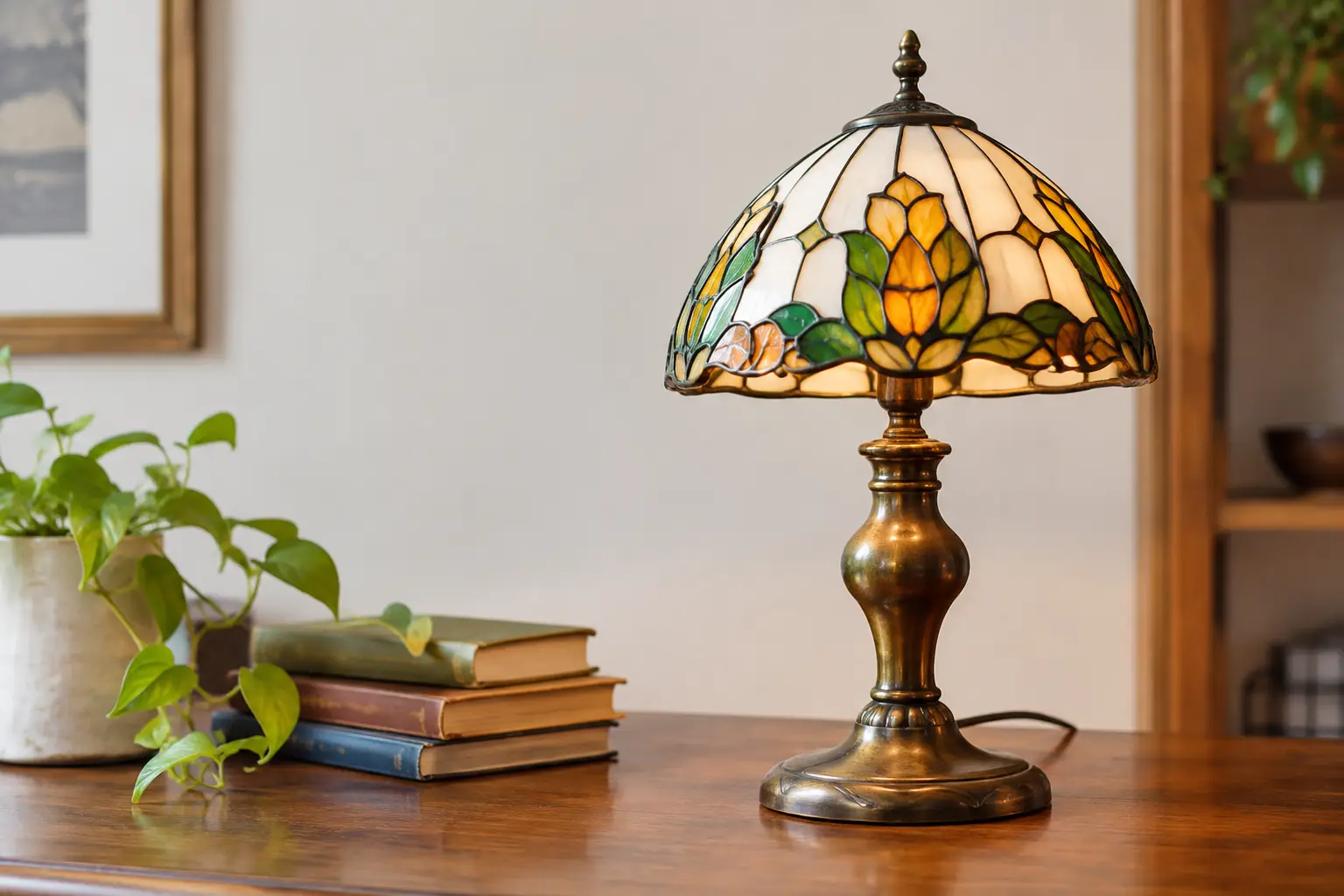
A Murano glass table lamp, an Italian brass floor lamp, or a sculptural Mid-Century fixture can transform a room long before it is switched on. But are vintage lamps safe for daily use? The answer is often yes, provided their electrical components have been properly assessed, restored, and matched to the way the lamp will be used.
Age alone does not make a lamp hazardous. A well-maintained 1950s lamp with professionally renewed wiring may be safer than a recent decorative lamp made with inferior components. What matters is the condition of the cord, plug, socket, internal insulation, switch, and shade, as well as the electrical standards of the country where the piece was originally made.
For collectors and design-minded homeowners, safety should be treated as part of responsible stewardship. A vintage lamp is not merely an object of illumination. It is a composition of material, proportion, craftsmanship, and technical detail. Restoring it intelligently preserves both its visual authority and its place in a contemporary interior.
Are Vintage Lamps Safe When Rewired?
In many cases, rewiring is the decisive step between an admired decorative object and a lamp ready for everyday life. Original wiring can be fragile even when its exterior appears intact. Rubber and early plastic insulation may harden, crack, or deteriorate within the lamp body, where damage is not immediately visible. Textile-covered cords can also be beautiful, but beauty should never be mistaken for proof of electrical integrity.
A professional rewiring service typically replaces the cord, plug, socket components, and, when needed, the switch. The restorer should inspect the wiring path through the base, stem, and metal fittings, ensuring that sharp edges cannot cut into the new cable. On lamps with a metal body, correct grounding is especially important. A three-prong plug may be appropriate when the lamp’s construction permits grounding and local electrical requirements call for it.
Rewiring does not have to erase authenticity. The best restoration respects the original silhouette and period character. A braided cloth cord in an appropriate color, a discreet quality socket, and a carefully selected plug can retain the lamp’s visual language while bringing its working parts up to modern expectations. For a rare Art Deco or Italian modernist piece, this balance is particularly valuable: the restoration should support the design, not announce itself.
What to Check Before Plugging In a Vintage Lamp
A seller’s description may say that a lamp is in working condition, but a close inspection remains wise before regular use. This is especially true for a recent acquisition, a lamp that has traveled internationally, or a fixture that has spent years in storage.
Look for these signs before connecting it to power:
- A cord that is cracked, sticky, stiff, flattened, frayed, or repaired with electrical tape.
- A plug with loose prongs, discoloration, missing insulation, or a two-prong design on a metal lamp that may require grounding.
- A socket that feels loose, shows corrosion, or allows the bulb to sit at an angle.
- A switch that sparks, crackles, becomes warm, or works intermittently.
- Visible exposed wire, improvised splices, or damaged insulation near the point where the cord enters the lamp.
- A base or stem that is unstable, particularly on tall floor lamps or lamps with heavy glass shades.
Do not test a questionable lamp by simply plugging it in. A qualified electrician or lamp restoration specialist can inspect the internal components safely and determine whether the issue is minor, such as a worn socket, or calls for complete rewiring.
The Socket, the Bulb, and the Heat Question
Many vintage lighting problems are caused not by the lamp’s age but by an unsuitable bulb. Earlier lamps were designed around incandescent bulbs, which produce considerable heat. A high-wattage incandescent bulb in a small table lamp can overheat a socket, discolor a shade, stress old wiring, and make a delicate fixture unpleasantly hot to touch.
LED bulbs are usually the more considered choice. They use less energy, run cooler, and reduce strain on shades and socket assemblies. Choose a bulb that does not exceed the fixture’s stated maximum wattage. If the original label is missing or unreadable, it is prudent to use a low-wattage LED and seek professional advice before increasing output.
Bulb shape matters as much as wattage. A globe bulb may sit too close to a shade, while a long tubular bulb can be unsuitable for a compact socket enclosure. In a lamp with hand-blown Murano glass, parchment, fabric, or original painted metal elements, leave sufficient space for ventilation and avoid bulbs that concentrate heat near fragile surfaces.
A dimmable LED bulb will not automatically work with every vintage dimmer. Old rotary dimmers were made for incandescent loads and can cause flickering, humming, or unreliable performance with LEDs. The solution may be a compatible LED bulb, an updated dimmer, or a lamp used without dimming. It depends on the fixture and on how much intervention is appropriate for the piece.
Imported Vintage Lamps Need Special Attention
European vintage lamps are often exceptionally desirable, particularly Italian lighting from the Mid-Century period. They may also have been wired for 220-240 volt systems, use plugs unfamiliar in the United States, or follow different conventions for grounding, switches, and socket fittings.
A plug adapter changes the physical connection, not the electrical compatibility. It should not be used as a shortcut for putting a European lamp into daily service in an American home. Depending on the socket and wiring, a voltage converter, replacement socket, or full US-standard rewiring may be needed. A professional can identify whether the lamp is suitable for a simple conversion or requires more extensive work.
This is also relevant to ceiling fixtures. A vintage pendant or chandelier should be installed by a licensed electrician who can assess its canopy, mounting hardware, wire capacity, weight, and compatibility with the ceiling junction box. The decorative chain or cable is not necessarily a safe structural support. Large glass chandeliers and substantial brass fixtures deserve installation that is as considered as the object itself.
Original Parts Versus Safe Restoration
Collectors sometimes hesitate to replace any original component, even a worn cord or aged socket. That instinct is understandable. Originality contributes to historical interest, and certain fixtures retain more value when their distinctive period hardware remains intact.
Yet electrical components are consumable working parts, not sacred artifacts. A cord that has become unsafe should be replaced. A socket that no longer grips a bulb securely should be renewed. If an original switch is visually significant, it may sometimes be retained as a decorative element while the internal electrical path is rebuilt by a specialist.
The right approach is selective rather than absolute. Preserve visible details with design value, such as a rare switch plate, branded fitting, distinctive glass, lacquered finish, or original shade frame. Replace hidden components when safety requires it. Keep removed original parts with the lamp when they have documentary or collector significance.
Where and How a Vintage Lamp Is Used Matters
A restored vintage lamp may be perfectly suitable for a living room side table and entirely unsuitable for a bathroom, outdoor terrace, or damp basement. Most older decorative lamps were not designed for wet locations, heavy commercial use, or the demands of a child’s room. Their materials may include untreated metal, delicate glass, silk shades, or finishes that do not tolerate humidity and frequent handling.
Placement affects safety as well as appearance. Keep cords away from walkways and under rugs, where friction and heat can damage insulation. Avoid overloading extension cords or power strips. Place floor lamps where their base cannot be knocked by doors, pets, or passing furniture. For a valuable lamp with a narrow base or substantial shade, a discreet stabilizing solution may be preferable to accepting unnecessary risk.
There is also a practical distinction between occasional decorative use and eight hours of daily illumination. A rare lamp in a guest room may require less intervention than the reading lamp used every evening beside a favorite chair. The more regularly a fixture is used, the more valuable a thorough professional inspection becomes.
A Considered Standard for Living With Vintage Lighting
The safest vintage lamps are not necessarily the newest-looking or the most heavily altered. They are the pieces whose electrical condition has been honestly evaluated and whose restoration respects their original design. At Sound Of Vintage Italy, the enduring appeal of vintage lighting lies precisely in this meeting of history and usability: a lamp can retain its period presence while serving a contemporary home with confidence.
Before making a treasured fixture part of daily life, let its materials, provenance, and wiring guide the decision. A careful restoration allows the light to reveal what made the object worth choosing in the first place.