
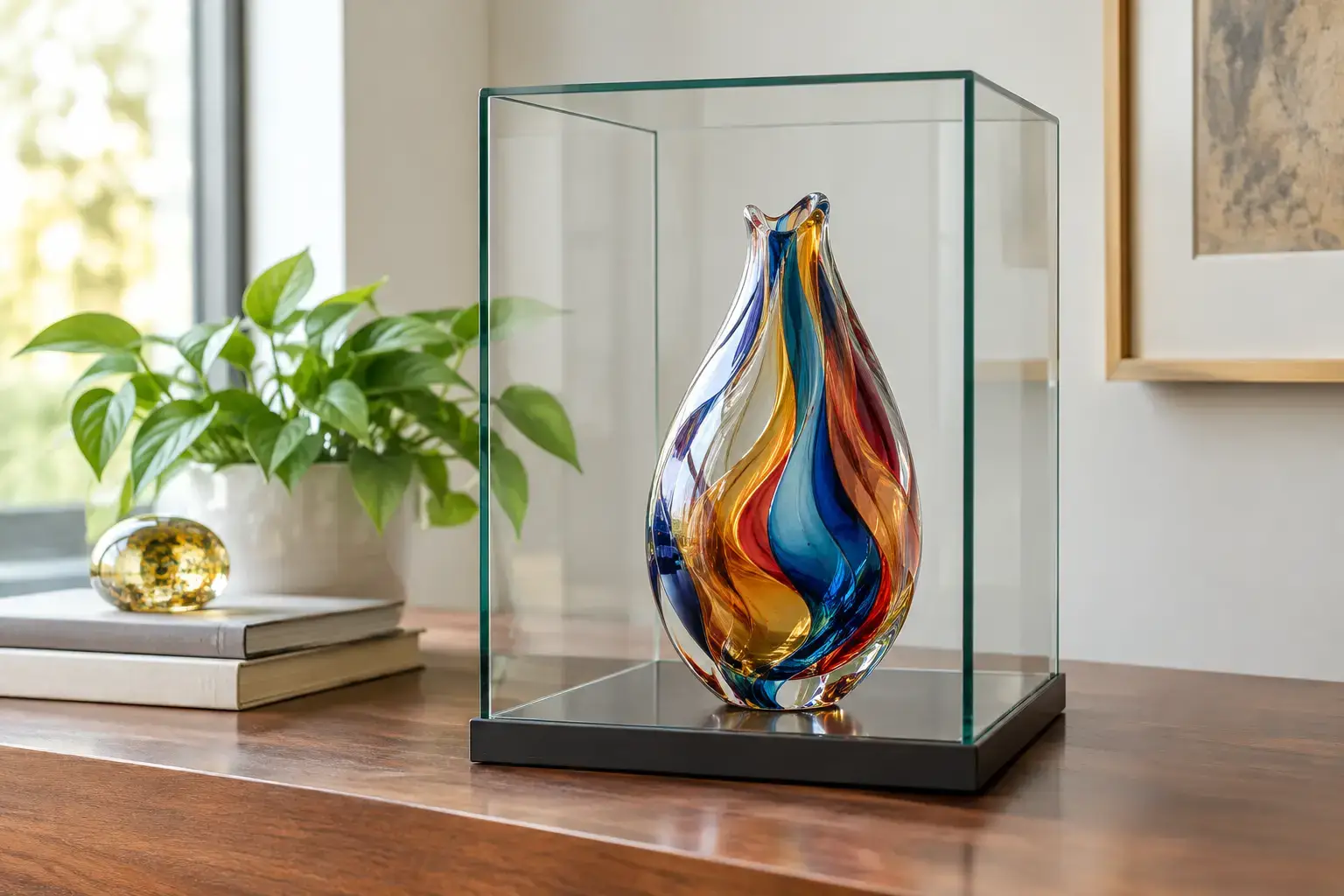
A Murano vase should never look as though it has been placed in a room by accident. Its transparency, saturated color, and hand-worked silhouette deserve a setting that gives the piece visual presence while protecting its fragile structure. To display Murano glass safely, begin with the assumption that every object needs both a stage and a margin of safety.
The best display is rarely the most crowded one. A single Sommerso vase on a properly proportioned console can carry more authority than a shelf filled edge to edge with glass. Thoughtful placement also preserves what makes Murano compelling: the movement of the glass, the changing density of color, and the small irregularities that reveal the hand of the maker.
Display Murano Glass Safely by Choosing the Right Surface
The surface beneath a Murano object matters as much as the piece itself. A level, rigid console, sideboard, or built-in shelf is generally preferable to a lightweight occasional table, a narrow floating shelf, or an unstable pedestal. Before arranging anything, test the furniture with gentle pressure from different sides. If it rocks, flexes, or shifts on the floor, it is not the right setting for valuable glass.
Avoid placing a vase directly on rough stone, unfinished wood, metal with a textured finish, or a lacquered surface that may become tacky with heat. A discreet protective layer is sensible, provided it does not look domestic or improvised. A thin museum wax application, used sparingly and according to the object’s weight and base shape, can help stabilize a piece on a smooth surface. For certain delicate works, a fitted clear acrylic disc or a refined felt pad can prevent abrasion without interrupting the visual effect.
Weight distribution deserves particular attention. Broad, low vessels tend to be stable, while tall necks, asymmetric forms, and sculptural figures may be unexpectedly top-heavy. Never assume that a substantial-looking glass object is secure simply because it is heavy. Lift it slightly, assess its center of gravity, and choose a location where it will not be brushed by a sleeve, bag, chair back, or opening door.
Give Each Piece Enough Space to Be Seen
Murano glass gains intensity from surrounding air and light. Crowding several pieces together not only weakens the composition but also creates obvious risks when dusting or rearranging. Leave enough distance that one object can be lifted without touching another. For a collection on a shelf, aim for clear visual intervals rather than a continuous line of forms.
This is especially relevant with pieces that have applied decorations, handles, pointed elements, or elaborate rims. A delicate applied leaf, a curled handle, or a protruding bird or fish motif is often more vulnerable than the central body of the vase. Arrange pieces with their most exposed details facing inward or away from a walkway where possible, without hiding the decorative work entirely.
A collector’s cabinet can be an excellent choice for smaller examples, paperweights, figurines, and delicate bowls. The cabinet should close smoothly, stand level, and have shelves rated for the combined weight of the collection. Glass shelves create a light, elegant effect, but they must be thick enough and properly supported. Painted wood or lined shelves may offer more visual warmth and can reduce the risk of a glass-on-glass contact point.
Light for Color, Not for Heat
Light is central to the character of Murano glass. It brings out the layered depth of Sommerso, the sparkle of aventurine, the opacity of lattimo, and the crystalline clarity of finely blown forms. Yet the wrong light can flatten color, produce distracting reflections, or introduce damaging heat.
Indirect daylight is often the most flattering option. A display near a window can work beautifully if the piece is set back from the glass and protected from prolonged direct sun. Strong sun may heat the object and the display surface, while intense ultraviolet exposure can affect nearby textiles, labels, or painted and mixed-material details. The concern is not always immediate damage to the glass itself, but the long-term condition of the complete object and its setting.
For evening display, choose low-heat LED lighting with a warm to neutral color temperature. Concealed shelf lighting can make a collection appear almost architectural, especially within a dark wood cabinet or against a quiet plaster wall. Position the light so it grazes or washes the glass rather than striking it head-on. Direct spots may create harsh glare and make a refined piece feel more like a retail prop than an object of design history.
Avoid halogen bulbs, exposed incandescent fixtures, and any lamp that becomes hot near the display. If the glass is part of a vintage lighting piece, inspection by a qualified professional is wise before regular use. Original electrical components can be historically significant, but condition and safe wiring must come first.
Consider the Room, Not Just the Shelf
A well-chosen room protects Murano glass from the routines of daily life. High-traffic entryways, crowded dining areas, and homes with energetic pets or young children call for more protected placement. That does not mean the collection has to disappear behind closed doors. It means choosing height, depth, and furniture placement strategically.
A console against a wall is generally safer than one placed behind a sofa, where guests may set down drinks or lean back without noticing what is behind them. Open shelving above a desk can work well, but avoid installing it above a chair that is frequently moved. In a dining room, keep important glass away from the edge of a buffet where serving pieces, bottles, and tableware regularly pass.
Humidity and temperature shifts should also guide the decision. Bathrooms, kitchens close to cooking areas, and unconditioned sunrooms are seldom ideal for collectible glass. While Murano glass is durable in many respects, abrupt changes and repeated condensation are not favorable conditions, particularly for pieces with metal mounts, glued elements, painted finishes, or old labels.
How to Handle and Clean Murano Glass
A safe display begins with safe handling. Always clear the destination before lifting the object, rather than carrying it while deciding where it belongs. Use both hands, supporting the body from underneath instead of lifting by a stopper, handle, finial, rim, or applied decoration. Remove rings, bracelets, or watches that could strike the surface.
For routine care, a soft, dry microfiber cloth is usually sufficient. Dust slowly, holding the object steady with one hand if it is small enough to do so without strain. Do not polish Murano glass with abrasive cloths, household sprays, or commercial cleaners that may leave residue. Avoid immersing antique or signed pieces in water, especially if they have labels, metallic details, or uncertain previous repairs.
If a piece needs more than gentle dusting, consult a conservator or experienced glass specialist. Cloudiness, cracks, loose additions, and unstable bases are not problems to solve with home remedies. A professional assessment can preserve both the object and its market value.
Create a Display With a Collector’s Eye
The most convincing Murano displays balance protection with character. A large mid-century vase may need only a low plinth, a calm wall color, and a nearby lamp to reveal its scale. A group of smaller Venetian pieces can become more compelling when arranged by color family, decade, or technique, with each object given enough room to read clearly.
Mixing Murano glass with vintage furniture, Italian lighting, or a carefully selected mirror can create a richer interior, but contrast should remain controlled. Let a rare glass object be the point of visual tension rather than one bright note among many competing finishes. The strongest rooms allow material, silhouette, and provenance to speak without excess.
At Sound Of Vintage Italy, the appeal of a distinctive vintage object lies not only in rarity, but in the way it changes a room through presence. Give Murano glass a stable setting, measured light, and space around its form, and it will retain the quiet authority that made you choose it in the first place.