
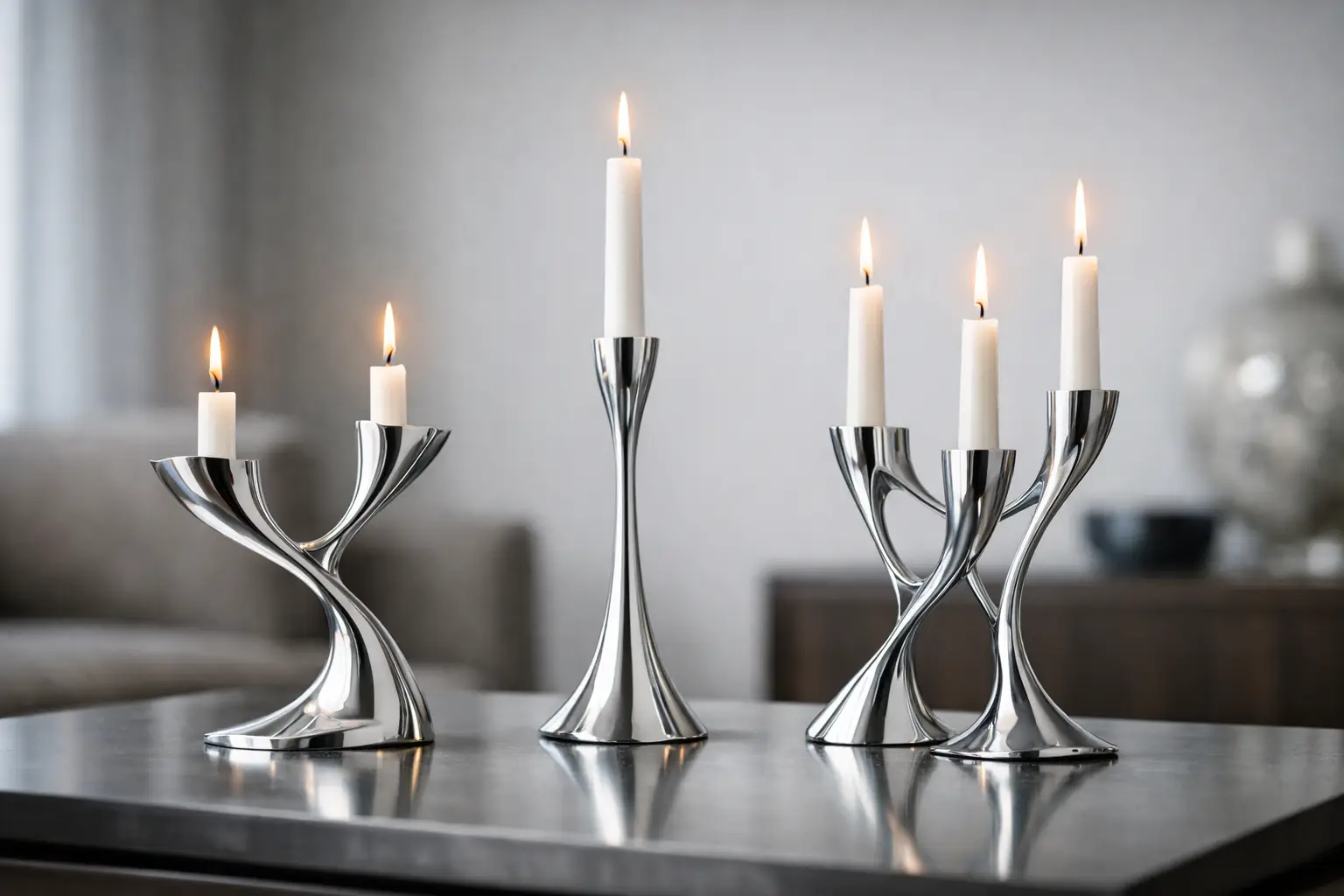
A Lino Sabattini candlestick does not need a candle to command a table. Its presence comes from proportion: a low, polished curve that catches the room’s light, a tall stem reduced to its essential line, or a cluster of forms that reads almost like a small metal sculpture. These are objects designed for use, yet their lasting appeal lies in the way they make an interior feel composed rather than decorated.
For collectors of Italian modernism, Sabattini’s work offers a particularly satisfying meeting point between craftsmanship and restraint. A candleholder may appear spare at first glance, but the controlled curve, reflective finish, and unexpected silhouette reveal a designer deeply attentive to how an object is held, viewed, and lived with.
The Italian Modernism of Lino Sabattini Candlesticks
Lino Sabattini was one of the defining Italian designers in metalware during the second half of the 20th century. Through Argenteria Sabattini, founded in 1956, he gave silver and silver-plated objects a new visual language. Rather than relying on ornament, he emphasized fluid forms, sculptural balance, and surfaces that changed character with the light.
His candlesticks are especially revealing examples of this approach. They transform a traditional domestic object into a modern gesture. Some are slender and architectural, with stems that rise from broad circular bases. Others are low and organic, recalling pebbles, shells, or abstracted flowers. The strongest designs retain a sense of movement even when placed perfectly still.
That tension between function and sculpture is central to their desirability. They belong naturally in a Mid-Century Modern setting, but they are not confined to it. A polished Sabattini piece can bring clarity to an ornate antique dining table, soften a severe contemporary interior, or add a distinctly Italian note to a room furnished with Murano glass and walnut.
Shapes That Define the Collection
Sabattini worked across many forms, so there is no single candlestick silhouette to look for. What connects the most recognizable examples is an economy of line. The base, stem, and candle cup are treated as one continuous composition rather than separate decorative elements.
Tall single-light candlesticks are often the most architectural. Their visual impact depends on verticality and reflection, making them especially effective in pairs on a console, mantel, or formal dining table. Low candlesticks and clustered candelabras have a more intimate quality. They suit a coffee table, sideboard, or a dining arrangement where conversation should remain unobstructed.
There are also modular and multi-arm designs whose value lies in rhythm. Repeating arcs and varied candle heights create a changing profile as the viewer moves around them. These pieces are ideal for collectors who appreciate the object as a centerpiece, even when it is not in use.
The finish matters as much as the form. Bright silver plate gives a crisp, almost liquid reflection. A more softly aged surface can feel quieter and more domestic. Neither is automatically preferable. The decision depends on whether an interior calls for a precise flash of polished metal or a gentler patina with visible history.
How to Identify an Authentic Sabattini Candlestick
Authenticity should begin with close observation, not with a single detail. Many vintage metal candlesticks share the streamlined vocabulary of Italian modernism, and a label alone is not always present after decades of use. A credible attribution is built from the relationship between form, construction, materials, and markings.
Look first underneath the base and around less visible edges. Original examples may carry marks associated with Sabattini or Argenteria Sabattini, sometimes alongside indications of silver plate or sterling silver. Marks can vary by production period and object type, so an incomplete or lightly worn stamp does not necessarily rule out authenticity. At the same time, an apparently correct mark should never be the only reason to buy.
Construction offers useful clues. Sabattini’s objects typically feel deliberate in the hand: bases are balanced, stems meet their supports cleanly, and the candle cups are proportioned with care. The surface should follow the geometry of the design rather than conceal awkward joins. On silver-plated pieces, normal wear may reveal a warmer underlying metal at high-contact points, particularly on rims and edges.
Provenance can add confidence and value. Original boxes, retailer labels, invoices, and documented collection history are welcome, though not essential. For a buyer, clear condition photographs and precise measurements are often more practical than a vague claim of rarity. A candlestick that is honestly described, even with small signs of age, is generally a more desirable acquisition than one presented with exaggerated certainty.
Condition, Patina, and Value
Vintage candlesticks were made to be used, and gentle signs of use are part of their story. Light surface scratches, minor tarnish, and discreet wax residue are common. On silver plate, small areas of wear can be acceptable when they do not interrupt the silhouette or compromise the integrity of the object.
The most significant condition issues are structural. Check that the piece stands level, that the candle cup is secure, and that multi-arm forms have not been bent out of alignment. Deep dents can be difficult to correct without altering the surface. Severe plating loss is also worth considering carefully, especially on highly polished designs where the finish contributes so much to the visual effect.
Value depends on more than age. A rare form, a complete pair, substantial scale, excellent condition, and a strong documented attribution can all affect desirability. Yet an accessible single candlestick may be the more intelligent choice for someone decorating rather than collecting by category. The best purchase is often the piece whose shape continues to reward attention in the intended room.
Styling Sabattini at Home
Lino Sabattini candlesticks work best when they are given visual space. Their forms are refined enough to become lost among too many small accessories. On a dining table, place a pair along the centerline with tapered candles in ivory, deep oxblood, or black. The contrast of flame against cool metal brings out the sculptural profile without making the arrangement feel formal or overworked.
For a more collected Italian interior, combine silver with tactile materials. A travertine table, dark lacquered wood, smoked glass, or a Murano vase offers contrast without competition. Avoid matching every metallic element in the room. Sabattini’s polished surfaces are more compelling when they act as a focused accent beside brass, chrome, or aged bronze.
Scale changes the effect. A tall pair can frame a mirror or artwork, while a low multi-candle piece can anchor a coffee table beneath a dramatic pendant lamp. In a minimal room, one significant candlestick may be enough. In a layered interior, a grouping of two or three related forms can create the sense of an edited collection rather than a set.
What to Consider Before Buying
Before choosing a piece, decide whether it will be used with candles, displayed as an object, or both. This affects the form that makes sense. A low and wide candlestick is practical for regular dinners; a tall, slender design may be better reserved for a mantel or console where it can be appreciated at eye level.
Measure the intended surface and consider the candle diameter. Vintage examples may have cups sized for narrow tapers rather than standard contemporary candles. A candle that fits too loosely can damage the rim with wax or create an unstable flame. It is also wise to check the base width, particularly with tall forms, if the object will be placed in a busy household.
Pairs are appealing for symmetry, but a single exceptional example should not be overlooked. Sabattini’s design language is strong enough to hold a composition alone. Conversely, if purchasing a pair, compare their height, finish, and color closely. Slight variation is expected in vintage objects, but mismatched plating or uneven wear can affect the overall presentation.
Caring for Silver and Silver Plate
Care should preserve the surface, not erase its age. After use, allow wax to cool, then lift it away gently with a fingernail or a wooden tool. Do not scrape aggressively and do not use abrasive pads. A soft, dry cloth is often sufficient for routine dusting.
When polishing is necessary, use a product appropriate to the metal and apply it sparingly with a soft cloth. Heavy polishing can gradually reduce plating and flatten the nuanced surface of an older piece. Keep candlesticks dry, avoid prolonged contact with rubber or damp fabric, and store them individually if possible to prevent scratching.
The most persuasive Sabattini candlestick is not always the brightest or the rarest. It is the one whose line feels inevitable in its setting, catching the last light at dinner and giving the room a quiet, unmistakably Italian sense of form.