
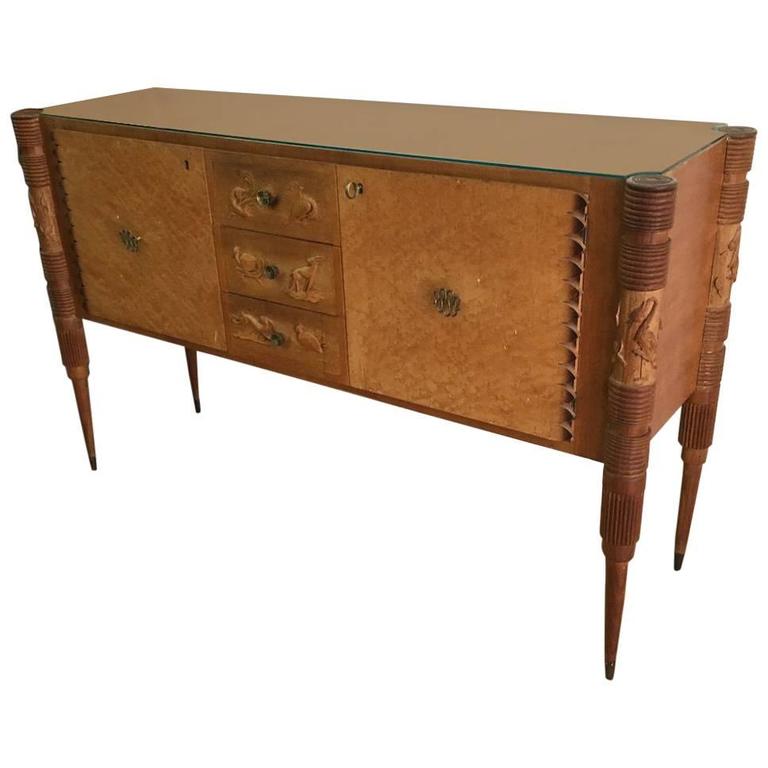
A room usually reveals its era in a few seconds. The line of a walnut sideboard, the lift of tapered legs, the glow of opaline glass, the balance between restraint and warmth – this is where design style mid century modern still feels remarkably current. Not because it is nostalgic, but because it solved a problem many interiors still have: how to look refined without looking overworked.
For collectors, designers, and homeowners with a trained eye, mid-century modern is less a trend than a visual language. It values proportion, material honesty, and functional beauty. Yet that same clarity often leads to oversimplification. Many spaces described as mid-century modern are simply minimal rooms with a teak chair. The distinction matters, especially when authenticity, decorative value, and long-term relevance are part of the purchase.
What design style mid century modern really means
Mid-century modern emerged across the 1940s through the 1960s, shaped by postwar production, architectural experimentation, and a new relationship between domestic life and modern design. Its best examples combine clean silhouettes with comfort, craftsmanship, and optimism. The aim was not austerity for its own sake. It was to create interiors and objects that felt intelligent, livable, and visually composed.
This is why the style remains so persuasive. A well-designed mid-century piece does not ask for attention through excess ornament. It earns attention through line, proportion, and finish. A rosewood cabinet with crisp geometry, a sculptural floor lamp in brass, or a Murano glass pendant with soft opacity can hold a room precisely because each form is resolved.
There is also a useful distinction between true period mid-century and the broader contemporary idea of the look. Original pieces carry the marks of their production context – specific veneers, joinery, patina, glass quality, and hardware details. Contemporary reproductions may capture the outline, but often miss the tactile depth that gives the original its authority.
The visual codes of the design style mid century modern
The style is easy to recognize when its core elements appear together. Furniture tends to favor low horizontal profiles, balanced volumes, and a sense of lightness created by slender legs and open space beneath the piece. Surfaces are typically warm rather than glossy, with wood grain playing a central decorative role.
Materials are central to the effect. Teak, walnut, rosewood, oak, brass, chrome, leather, cane, and glass appear frequently, often in carefully judged combinations. The contrast matters. A wood cabinet gains precision from metal hardware. A glass lamp gains depth from a brass stem. A room gains rhythm when smooth, reflective, and tactile surfaces are allowed to speak to one another.
Color, too, is more nuanced than the common stereotype. Yes, mid-century modern can include olive, mustard, rust, black, and warm neutrals. But the most elegant interiors rarely rely on color alone. They are built on tonal balance. Walnut against ivory. Smoked glass against cream upholstery. A single saturated ceramic or Murano accent against a quiet architectural backdrop. When the palette becomes too loud or too literal, the room starts to feel theatrical rather than collected.
Why lighting is often the deciding factor
If there is one category that can make or break a mid-century interior, it is lighting. Not just because lighting defines atmosphere, but because many of the period’s most memorable objects were luminaires. Suspended globes, brass sconces, parchment shades, opaline diffusers, and sculptural table lamps all express the era’s interest in utility refined by form.
This is where many interiors fall short. The furniture may be correct, but the lighting is generic, too cold, or stylistically disconnected. Mid-century modern needs light that feels considered. The ideal fixture does more than illuminate. It introduces line, material contrast, and a focal presence, especially in rooms where the furniture vocabulary is intentionally restrained.
Italian production is particularly relevant here. Mid-century lighting from Italy often carries a distinctive sophistication – more sensual in material expression, sometimes more sculptural, and frequently richer in glasswork than its strictly utilitarian counterparts elsewhere. Murano, in particular, can bring an elevated softness to a space dominated by wood and straight lines. Used well, it prevents the room from becoming too dry.
Furniture that anchors the room without overfilling it
A true mid-century interior is rarely crowded. Space is part of the composition. Each piece should justify its presence, whether through function, silhouette, or material quality. This is why a single exceptional credenza often does more for a room than multiple secondary storage pieces.
Storage furniture is one of the strongest entry points into the style. Sideboards, chests, and display cabinets often capture its essential traits at once: linear form, practical use, and refined veneer work. Seating introduces a different challenge. Mid-century chairs and sofas can be visually light, but comfort varies significantly depending on the maker, restoration quality, and upholstery choices. This is one of the style’s real trade-offs. An iconic silhouette is not always the most forgiving for daily use.
Tables deserve the same scrutiny. Coffee tables and dining tables from the period often look effortless, but good examples rely on subtle geometry and excellent construction. A weak reproduction may resemble the original from a distance, then disappoint in weight, finish, and proportion. For buyers who care about longevity, that difference becomes obvious very quickly.
How to keep the look from turning into a set piece
The risk with mid-century modern is not that it lacks character. The risk is that it becomes too predictable. A room filled only with textbook mid-century pieces can feel staged, almost like a showroom reconstruction. The most persuasive interiors introduce tension.
That tension can come from periods, textures, or decorative accents. An Art Deco mirror can sharpen a mid-century living room. A sculptural antique object can interrupt the clean lines in a useful way. A Sicilian ceramic piece can bring regional identity and warmth. Even fashion-adjacent accessories – a lacquered box, a brass valet, a leather object with patina – can make the room feel inhabited rather than assembled by category.
The principle is simple: keep the structural language coherent, then allow the accents to complicate it. Mid-century modern works best when it remains the dominant grammar, not the entire conversation.
Authentic vintage or new production?
This depends on what matters most to you. If the goal is speed, uniformity, and easier sourcing, new production can provide the silhouette. For large projects with tight lead times, that has practical value. But if the goal is visual authority, collectibility, and material richness, authentic vintage has a clear advantage.
Original pieces tend to carry better woods, more convincing finishes, and the kind of detail that comes from real manufacturing history rather than stylistic imitation. They also age differently. Patina, minor irregularities, and signs of use can give a room credibility that pristine reproduction rarely achieves.
Of course, vintage requires discernment. Condition varies. Restoration can preserve value or erase it, depending on how it is done. Veneers may need attention. Electrical components in lighting often require updating. This is precisely why curated selection matters. A strong dealer or specialist edit saves the buyer from attractive but compromised pieces that photograph well and live poorly.
Styling the look for contemporary homes
The most successful mid-century interiors for current homes are not rigidly historical. They respect the period, but they adapt it. Larger contemporary rooms may need stronger scale than original 1950s apartments required. Open-plan spaces may benefit from fewer but more substantial anchor pieces. In smaller urban interiors, a pair of sculptural lamps or one well-proportioned sideboard may communicate the style more effectively than trying to reproduce a full period setting.
Texture is especially important in contemporary adaptation. Modern architecture can be hard-edged, and mid-century furniture alone may not soften it enough. Wool, boucle, linen, parchment, smoked glass, and aged brass help create the layered atmosphere that makes the style feel complete.
There is also no rule that every room should express the style at the same intensity. A dining room may carry it fully through lighting, table, and case goods, while a bedroom may borrow only its calm palette and one vintage statement piece. Selectivity often reads as confidence.
For those drawn to collectible interiors, Sound Of Vintage Italy approaches this territory in the most convincing way – not by flattening it into trend language, but by treating each object as part of a broader decorative culture shaped by provenance, material, and presence.
The real appeal of mid-century modern is not that it looks familiar. It is that, at its best, it still knows how to make a room feel resolved. When you choose pieces with structure, patina, and quiet authority, the style stops being a label and starts becoming a point of view.