

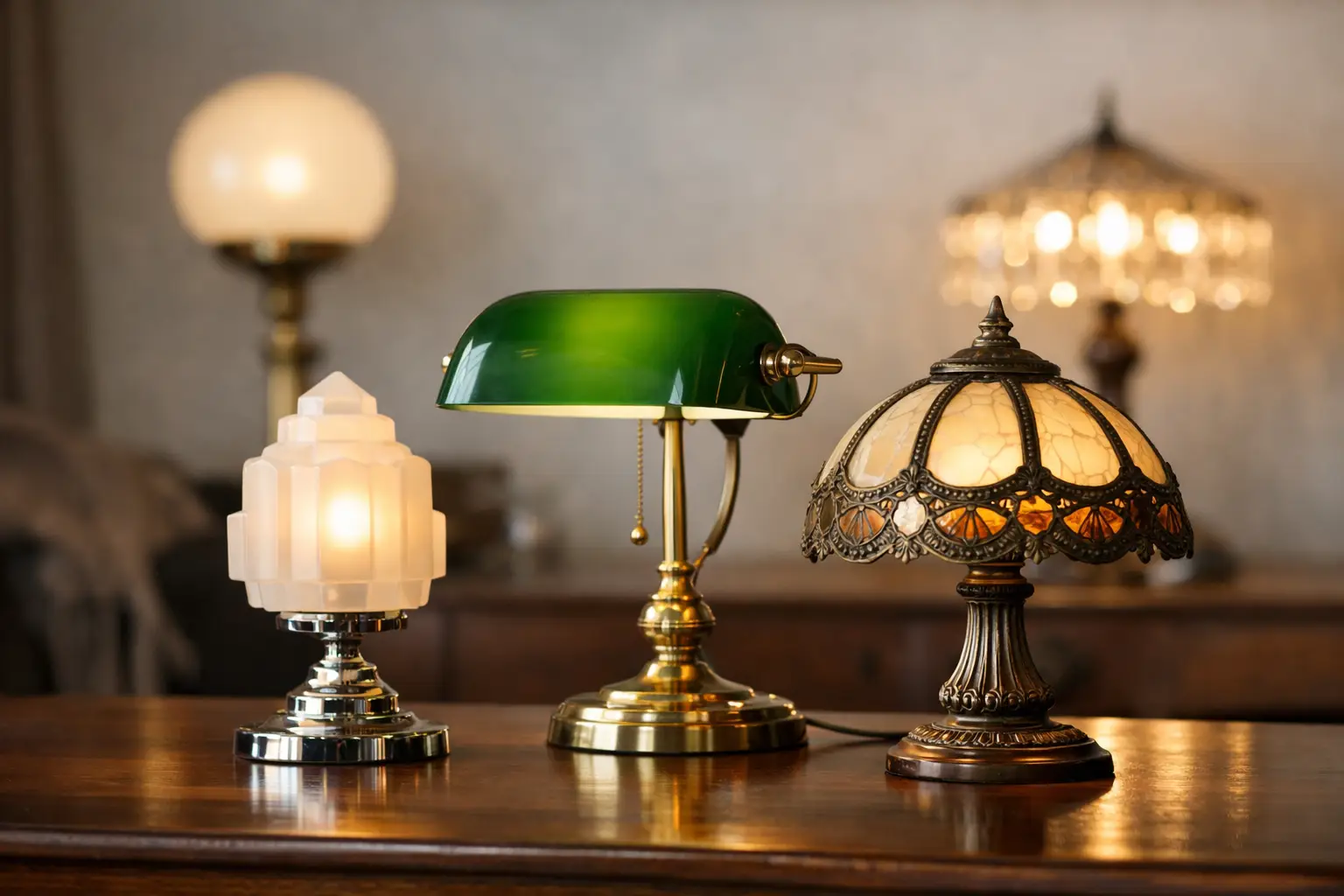
A vintage lamp can change a room faster than a sofa, a rug, or a fresh coat of paint. Switch on the right Murano table lamp, a sculptural Mid-Century floor lamp, or an Art Deco sconce, and the entire atmosphere shifts. So, are vintage lamps worth buying? For many interiors, yes – but only when the piece offers more than age alone.
The real value of a vintage lamp sits at the intersection of design presence, material quality, authenticity, and condition. Some pieces are remarkable acquisitions that bring depth, rarity, and lasting visual character. Others are simply old lighting with little decorative or collectible interest. Knowing the difference is what makes the purchase worthwhile.
Are vintage lamps worth buying for design value?
If your goal is to create an interior with identity, vintage lighting is often one of the most intelligent categories to buy. Lamps are functional objects, but they are also sculptural forms. They occupy eye level, shape mood, and influence how surfaces, fabrics, and finishes are perceived throughout a room.
A strong vintage lamp introduces something that contemporary mass production often avoids: personality. The proportions may be bolder, the materials richer, the silhouette less predictable. Think of hand-blown Murano glass, patinated brass, lacquered metal, carved wood, pleated shades, or chromed geometric structures from the 1970s. These details do not read as generic decor. They read as decisions.
That distinction matters. In a carefully designed home, a lamp should not feel like an afterthought. Vintage models often carry a visual language tied to a specific design era – Art Nouveau, Art Deco, Mid-Century Modern, Space Age, Italian modernism – and that gives the room cultural texture as well as illumination.
For this reason alone, many buyers find vintage lamps worth buying even before considering resale value. They do a great deal of aesthetic work.
Quality is often better, but not always
One of the strongest arguments in favor of vintage lighting is construction. Many older lamps were made in smaller production runs, with heavier materials and a stronger emphasis on craft. Solid brass bases, thick glass, ceramic bodies, turned wood, and hand-finished metal components often feel substantially different from lightweight contemporary alternatives.
That said, age is not a guarantee of excellence. Plenty of vintage lamps were made for the middle market, and some have little distinction beyond nostalgia. A lamp can be from the 1960s and still be ordinary in both material and design. The question is not simply whether it is vintage, but whether it was well made in the first place.
The best pieces usually show coherence. The base, shade proportions, hardware, and decorative details belong together. Materials feel intentional, not improvised. Even signs of age can enhance the piece when the original quality is high. A soft patina on brass, slight irregularities in hand-blown glass, or minor wear on lacquer can add depth rather than diminish appeal.
Authenticity changes the equation
When people ask, are vintage lamps worth buying, they are often really asking whether the lamp is authentic enough to justify the price. That is the right question.
Authenticity influences both decorative value and market value. An original lamp by a known maker, or a piece with documented period characteristics, will generally hold more interest than a later reproduction. The difference can be subtle to an untrained eye. Murano glass is a classic example. A true vintage Murano lamp has a different presence from a generic glass lamp made in a Murano style. The color, technique, weight, detail, and quality of execution are rarely comparable.
This does not mean every purchase must be by a famous designer. Many worthwhile lamps are anonymous. But they should still show recognizable period integrity. Does the wiring hardware appear adapted from a later era? Is the shade clearly not original but presented as if it were? Are decorative elements inconsistent with the supposed date? These details matter.
Buying from a specialized curator can reduce uncertainty. A selective vintage dealer is not only selling an object, but also filtering out the noise of the market: overrestored pieces, vague attributions, and decorative items with little real relevance.
Condition matters more than buyers expect
A vintage lamp can be beautiful and still be a poor purchase if its condition compromises use, safety, or future value. Lighting is not like a purely decorative object. It must function.
Rewiring is common and often desirable, especially for older lamps intended for contemporary electrical standards. New wiring does not usually reduce value when done properly. In fact, safe professional rewiring is often part of responsible preservation. What deserves attention is how sensitively the work was completed. Original fittings, switches, and sockets are not always practical to retain, but crude replacements can alter the character of the piece.
Also look carefully at the body of the lamp. Cracks in glass, structural instability, corrosion near electrical components, missing finials, damaged mounts, or poorly repaired breaks can change the buying decision. Minor wear is expected. Major compromise is different.
Condition should always be judged in relation to rarity. A rare Italian lamp with some age-related imperfections may still be a compelling acquisition. A common piece with the same issues may not be worth the effort or cost.
Value is not only financial
It is tempting to evaluate vintage lamps purely as investments, but that approach is too narrow. Some lamps do appreciate, especially those by recognized makers, iconic design periods, or highly collectible categories such as Murano glass and distinctive European modernist lighting. But not every good vintage lamp is a financial asset in the strict sense.
The more relevant question for most design-conscious buyers is whether the piece delivers lasting value inside the home. Will it still feel specific and desirable five years from now? Will it give the room a stronger point of view than a newly manufactured alternative at the same price? Will it age well stylistically?
Often, the answer is yes. Vintage lamps tend to resist the short life cycle of trend-led decor because they already come from a complete visual language. They are not trying to imitate history. They belong to it.
That can make them more stable purchases than many contemporary lighting options that follow temporary styling cues. A good vintage lamp may move from one interior to another, from apartment to house, from reading corner to entry console, without losing relevance.
When vintage lamps are absolutely worth buying
Vintage lighting makes particular sense when you want one of three things: visual distinction, material richness, or a collectible object with decorative function. In these cases, the category performs exceptionally well.
A pair of vintage wall sconces can give architectural depth to a flat room. A dramatic table lamp in blown glass can become the focal point of a study or bedroom. A floor lamp with a strong 1960s or 1970s silhouette can anchor a seating area more effectively than many larger furniture pieces.
This is especially true when the lamp offers a rare combination of utility and presence. Unlike many collectible objects, a lamp participates in daily life. It is seen in daylight and at night. It shapes mood. It creates ritual.
For buyers who appreciate interiors with memory and authorship, that makes vintage lighting one of the most rewarding categories to collect.
When they are not worth buying
Not every old lamp deserves a place in a refined interior. Some pieces are overpriced because the word vintage is used too loosely. Others have been altered so extensively that their original character is gone. Some are simply too damaged, too generic, or too impractical for modern use.
You should be cautious when the value seems to rely only on age, not design. The same is true when provenance is vague, materials are weak, or restoration costs will exceed the decorative benefit. If a lamp needs a new shade, full rewiring, replacement hardware, structural repair, and still lacks distinction, it is rarely a wise purchase.
Scale is another issue. A lamp can be beautiful in isolation and wrong for the room. Oversized bases, low light output, awkward proportions, or highly specific styles may limit flexibility. Worth buying does not only mean desirable. It means suitable.
How to decide with confidence
The most reliable way to buy well is to assess four things together: design, authenticity, condition, and context. Design asks whether the piece has real visual authority. Authenticity asks whether it is true to its period or maker. Condition asks what it needs now and what it may need later. Context asks whether it fits your interior and your way of living.
That final point is often overlooked. A highly collectible lamp may still be wrong for a minimalist project that needs quiet forms. A delicate glass lamp may not suit a busy family environment. A statement piece may be perfect in a restrained room and excessive in one already filled with visual events.
The strongest purchases are the ones that feel both elevated and inevitable.
For buyers who want curation rather than endless searching, a specialized source such as Sound Of Vintage Italy can make the process far more precise. The benefit is not just access to vintage lighting, but access to selection – pieces chosen for style, presence, and relevance rather than volume.
A vintage lamp is worth buying when it brings something a newer object cannot easily replicate: patina, authorship, atmosphere, and a sense that the room has been composed rather than merely furnished. If it offers those qualities with honesty and balance, it will rarely feel like a passing purchase.
Sorry, the comment form is closed at this time.