
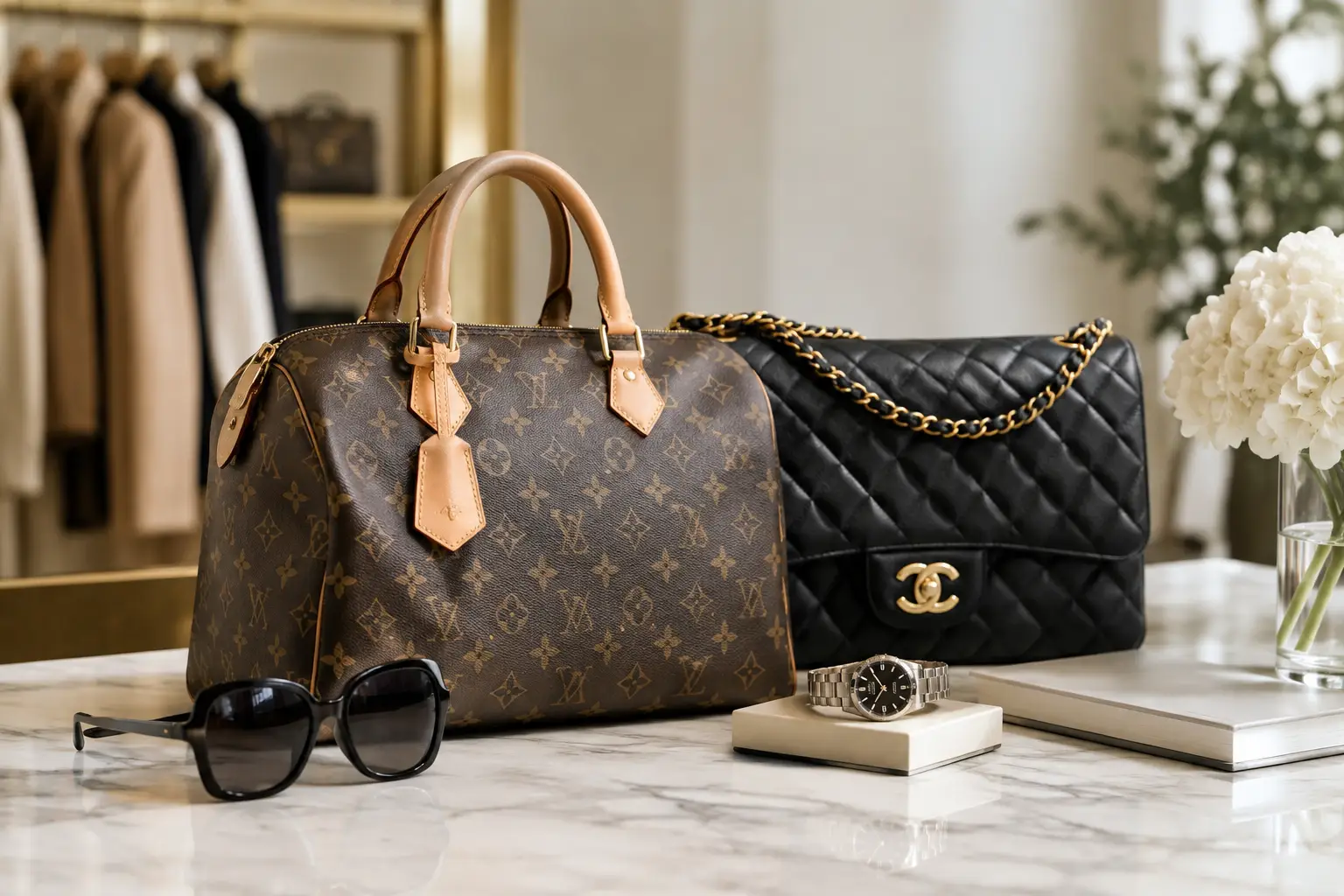
A Murano glass chandelier with a traceable history, a perfectly patinated Italian mirror, or a rare vintage handbag does more than furnish a room or complete an outfit. It introduces a point of view. The future of vintage luxury resale will belong to objects that carry this kind of presence: pieces with clear authorship, material quality, and a history that can be understood as easily as their beauty can be seen.
For buyers of high-end vintage, resale is no longer simply an alternative to buying new. It is a considered way of collecting. The appeal lies in finding what cannot be repeated: the proportion of a 1950s floor lamp, the irregular depth of handblown Murano glass, the construction of an Art Deco cabinet, or the particular finish that only decades of careful use can create.
The Future of Vintage Luxury Resale Favors Distinction
Luxury once relied heavily on newness, seasonal availability, and the authority of a label. Those signals still matter, but they are no longer sufficient for collectors and design-conscious buyers. A piece must offer something more lasting: rarity, cultural relevance, excellent condition, or a visual language that resists the cycle of fast trends.
This shift is especially visible in interiors. Uniform rooms assembled from the same contemporary sources have begun to feel interchangeable. Vintage lighting, antique mirrors, sculptural seating, and decorative objects from recognizable design periods bring tension and character to a space. They make an interior feel collected rather than purchased all at once.
The strongest resale categories will therefore be those with a distinct identity. Mid-Century Italian lighting, Art Nouveau details, Art Deco furniture, Murano glass, and singular Sicilian objects have an advantage because they are not anonymous. Their forms, techniques, and regional references give buyers a meaningful reason to choose one piece over another.
Provenance Will Become Part of the Object
As the market grows, provenance will move from a reassuring detail to a central source of value. Buyers will increasingly expect clear information about period, maker, materials, origin, restoration, and condition. For important pieces, a credible chain of ownership or supporting documentation can make a substantial difference.
That does not mean every object needs a museum archive to be desirable. Many exceptional vintage finds emerge from private homes, estate clearances, and small collections without extensive paperwork. In these cases, expertise matters. A knowledgeable seller can identify construction methods, stylistic references, signatures, and age-consistent details that help place an object accurately.
Transparency is equally important when an item has been restored. Sensitive rewiring on a vintage lamp or professional conservation of a veneer surface can preserve an object’s usefulness and beauty. Concealing such work creates uncertainty. Describing it clearly gives the buyer the confidence to appreciate the piece for what it is.
Condition Will Be Judged with More Nuance
The language of condition is changing. A small variation in gilt metal, light wear to leather, or minor irregularity in antique glass is not automatically a flaw. Often, it is evidence that the object has lived a real life and retained its integrity through time.
Still, patina is not an excuse for neglect. The distinction between honest age and damage will become sharper as buyers become better informed. A chipped Murano vase, a weakened frame, or an unstable electrical component requires thoughtful assessment. The right choice depends on the object, its rarity, and its intended use.
Collectors may prefer an untouched example with visible age, while an interior designer sourcing for a hospitality project may need a restored piece that meets practical demands. Neither approach is inherently superior. What matters is that the condition supports the object’s purpose without erasing the qualities that make it special.
Digital Resale Needs a Physical Standard of Trust
Vintage luxury resale has become easier to discover online, but digital access also raises expectations. High-resolution photography, measured dimensions, close views of surfaces, and honest condition descriptions are no longer extras. They are the foundation of a credible buying experience.
For decorative objects and furniture, scale remains one of the greatest challenges of online purchasing. A lamp can appear monumental in a close photograph and surprisingly intimate in a room. A mirror may look restrained until its dimensions reveal its architectural presence. Precise information helps buyers imagine the piece in context and reduces the distance between screen and space.
Digital tools will become more refined, from better image-based research to more detailed condition reporting and secure records of sale. Yet technology will not replace the role of the curator. It can organize information, but it cannot fully explain why a particular 1970s Italian lamp has more visual authority than another, or why a modest object becomes memorable through form, color, and placement.
That human judgment is where specialist boutiques remain valuable. A curated selection saves time, but more importantly, it creates a point of view. At Sound Of Vintage Italy, the conversation between lighting, furniture, fashion accessories, and Italian decorative arts reflects the way collectors actually live with objects: across rooms, eras, and personal styles.
The Future of Vintage Luxury Resale Is Not Only About Sustainability
The environmental argument for resale is valid. Extending the life of well-made objects can reduce demand for new production, and vintage pieces often carry a level of craftsmanship that encourages repair rather than replacement. But sustainability alone does not explain the growing desire for luxury vintage.
People are also looking for relief from visual sameness. They want a home that feels personal, a wardrobe that avoids predictable signals, and objects that reward close attention. Vintage answers this desire because each piece has limits. There may be only one available, and once it is gone, finding a comparable example may take months or years.
That scarcity can create urgency, but the best purchases should not be rushed. A rare item is not automatically the right item. Buyers should consider proportion, condition, origin, and how the piece will relate to what they already own. The most successful vintage interiors are not built from a checklist of iconic names. They are built through contrast, restraint, and confidence.
Categories Likely to Hold Attention
Certain areas of the market are positioned for continued interest because they combine decorative impact with a recognizable history. Italian lighting remains especially compelling, from polished brass and smoked glass to expressive Murano forms. It performs a practical role while acting as sculpture, which gives it unusual power in both private and professional spaces.
Murano glass will continue to attract collectors, although quality and attribution will matter more than broad labels. Pieces with distinctive techniques, strong color, refined proportions, or documented makers will stand apart from generic decorative glass. The same principle applies to fashion accessories: condition, model, material, and period often matter more than a visible logo.
Antique and modern decorative objects may see a broader audience as interiors become less strict about period purity. An Art Deco mirror can sharpen a contemporary room. A Sicilian ceramic object can bring warmth to a minimalist setting. A 1960s table lamp can transform an otherwise quiet corner. The future is not one style replacing another. It is a more fluent mix, guided by discernment.
Buying for the Long View
The most reliable way to approach vintage luxury resale is to buy pieces that would remain compelling even if market attention shifted tomorrow. This does not require only famous designers or investment-level prices. It requires an eye for proportion, material, craftsmanship, and the emotional charge of an object.
Before choosing, consider whether the piece has a clear identity, whether its condition is honestly presented, and whether it can be lived with rather than merely displayed. A beautiful object should earn its place through more than rarity. It should alter the atmosphere around it.
The next chapter of luxury resale will be defined by better information, more exacting buyers, and a renewed respect for the irreplaceable. The most enduring pieces will not compete with the new. They will make the new seem less necessary.