
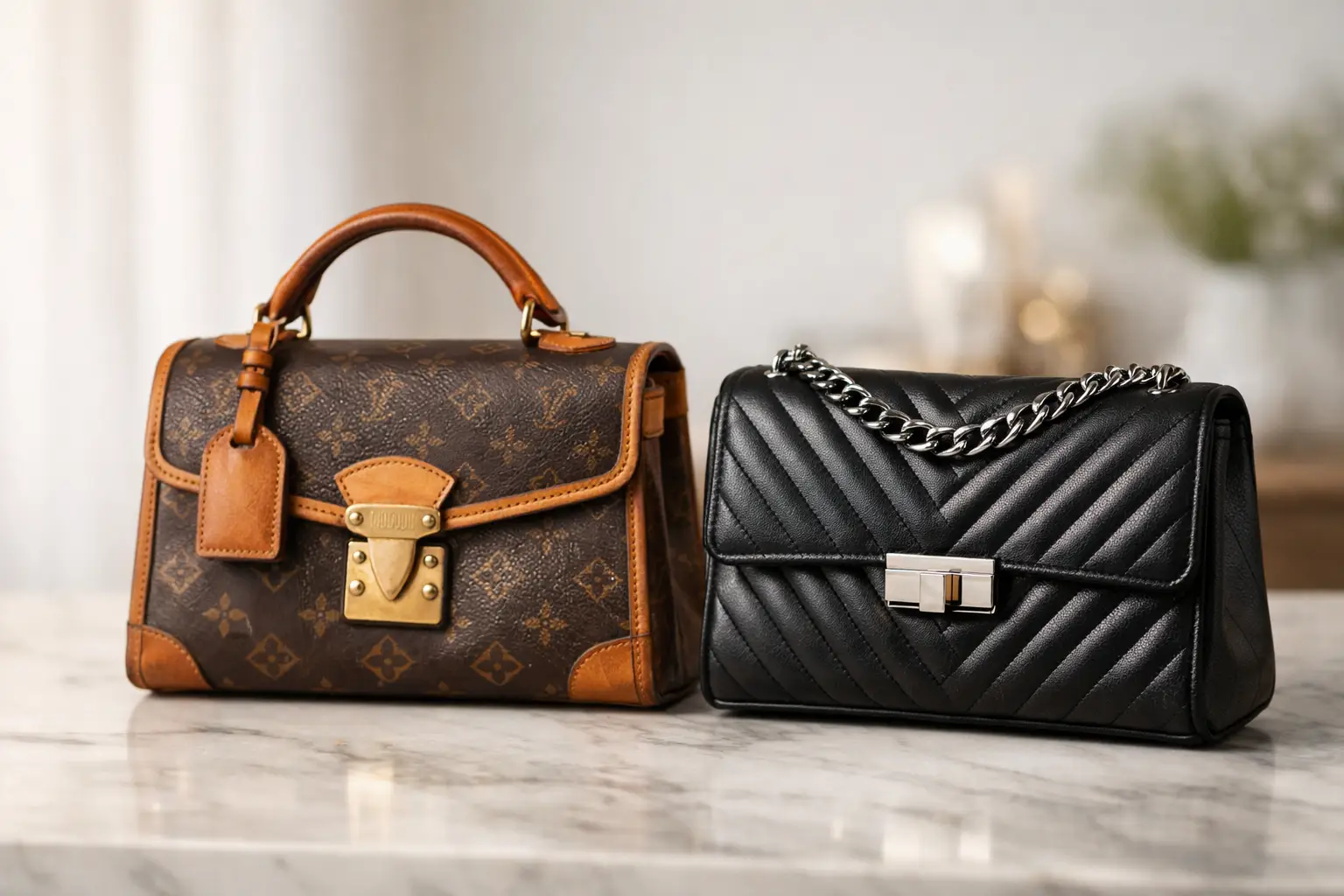
A handbag can be immaculate, expensive, and instantly recognizable, yet still feel anonymous. Another may show the softened grain of decades-old leather, a patina earned through use, and hardware from a production era that will not return. That is the real question behind a vintage handbag versus new luxury bag: not simply old against new, but individuality against immediacy, history against certainty, and character against convenience.
For a considered wardrobe, either can be the right choice. The distinction lies in what you expect the bag to bring to your life: a precise contemporary statement, a collectible object, a practical daily companion, or a piece that makes even a simple coat and pair of trousers feel unmistakably personal.
Vintage Handbag Versus New Luxury Bag: The Essential Difference
A new luxury handbag arrives with a clear proposition. It reflects the current design language of a house, benefits from modern construction standards, and usually comes with predictable materials, packaging, and after-sales support. For someone seeking a current silhouette, pristine finish, and the confidence of being its first owner, that clarity has value.
A vintage handbag offers a different kind of luxury. Its appeal is rooted in provenance, period design, and scarcity. A 1960s frame bag, a 1970s shoulder style, or an early logo piece may carry details that have disappeared from contemporary collections: hand-finished clasps, unusual linings, more architectural proportions, or leather that has developed a depth no factory finishing can imitate.
The distinction is also visual. New luxury often speaks a global language, designed to be immediately legible from New York to Milan. Vintage can be quieter and more specific. It may signal an eye for fashion history rather than a preference for the season’s most visible accessory.
Design Identity: Current Relevance or Period Character
Contemporary luxury bags are designed for present-day routines. Their interiors may accommodate a phone, cardholder, keys, and sunglasses more efficiently than a bag made fifty years ago. Straps are often adjustable, closures are engineered for ease, and proportions respond to how people dress now.
That practicality should not be dismissed. A bag intended for everyday use must work as well as it looks. If you need a piece that can move from commute to dinner with minimal concern, a new model in durable leather may be the more intelligent purchase.
Vintage excels when the objective is distinction. The shape of a compact top-handle bag from the 1950s, the graphic hardware of an Art Deco-inspired clutch, or the saturated color of a late-century Italian leather shoulder bag can introduce a strong visual note without relying on oversized branding. These pieces do not merely accompany an outfit. They establish its point of view.
For collectors and interiors-minded buyers, that connection between fashion and decorative arts is especially compelling. The same instinct that recognizes the sculptural line of a Murano glass lamp or the elegance of a Mid-Century brass detail often gravitates toward a handbag with a similarly defined period signature.
The advantage of rarity
Luxury houses may reissue iconic designs, but reissues are interpretations, not replacements. An original vintage bag holds the vocabulary of its own time: the specific handle drop, chain weight, clasp mechanism, logo treatment, and material choices of a past collection.
Rarity does not automatically mean value, however. A less common bag with limited demand may remain more affordable than a widely sought-after classic. The strongest vintage purchases balance three qualities: authentic period character, excellent condition for the age, and a design that still feels relevant beyond a passing trend.
Craftsmanship and Materials: Look Beyond the Label
Both new and vintage luxury can be beautifully made, but craftsmanship should be assessed piece by piece rather than assumed from a name. A respected house has produced exceptional work across decades, but construction methods, workshops, and material sourcing change over time.
Vintage bags frequently reward close inspection. Look for even hand stitching, substantial hardware, neatly finished edges, aligned patterns, and linings that sit smoothly within the structure. Older leather can have remarkable density and softness, particularly when it has been stored correctly. Its surface may show small marks, but these can read as patina rather than damage.
New bags offer the appeal of untouched materials. The leather is crisp, the corners are clean, and the hardware is bright. Yet pristine condition alone is not a guarantee of superior construction. Examine the same details: stitching, edge paint, closures, handle attachment, and the way the bag holds its form when empty.
Some buyers prefer the controlled perfection of a new piece. Others are drawn to the nuanced irregularity of age. Neither response is more correct. It is a matter of whether you see a light scratch as a flaw or as part of an object’s continuing story.
Condition Is the Decisive Vintage Question
A vintage handbag should not be expected to look new, and attempts to make it appear so can sometimes diminish its integrity. A gentle patina, subtle leather darkening, and minor signs of use are often appropriate for age. What matters is whether these signs affect beauty, function, or long-term wear.
Before choosing a vintage piece, consider the condition of the corners, handles, strap attachments, hardware plating, interior lining, and closure. Check for dryness or cracking in leather, odor in textile or suede interiors, corrosion on metal components, and structural distortion. A bag with a beautiful exterior but failing handles may require specialist restoration before it can be worn with confidence.
Restoration is not inherently negative. Careful work by an experienced conservator can stabilize a treasured bag and extend its useful life. But restoration should be reflected in the price, and overly aggressive refinishing can erase the details that make vintage appealing in the first place.
New luxury removes much of this assessment. You are buying a bag at the beginning of its life, often with brand servicing available. That reassurance may be worth paying for, especially for a first luxury purchase or a bag intended to withstand frequent use.
Value, Price, and the Myth of the Guaranteed Investment
The language of investment is often used too casually around luxury accessories. Some bags do appreciate, especially scarce examples in excellent condition with sustained collector demand. Many do not. Market value depends on brand, model, provenance, condition, material, rarity, and timing, not simply age or original retail price.
A vintage bag can offer strong value because its price is not always tied to the newest retail increase. It may provide better materials, greater rarity, and more visual impact for a comparable budget. It can also be a thoughtful way to buy luxury without participating in the cycle of seasonal replacement.
At the same time, vintage requires discernment. Authentication, condition reporting, and seller expertise matter. A documented, carefully selected bag is usually a safer proposition than an apparent bargain with vague photographs and no clear history.
A new bag has a more transparent entry price, but its resale value can shift quickly once it leaves the boutique. Buy it because you will use it and enjoy it, not because a future return is promised. The most satisfying value is often cost per wear combined with the pleasure of owning something that still feels right years later.
How to Choose the Right Bag for Your Collection
Choose new luxury when you want a dependable everyday bag, a current design, untouched condition, and a purchase with fewer unknowns. It is especially suitable when function is non-negotiable: you need a reliable closure, a practical interior, weather-resistant material, or a bag that can tolerate a demanding weekly schedule.
Choose vintage when you are looking for a signature piece, a rare construction, or a more individual expression of luxury. It is particularly rewarding if you enjoy fashion history, appreciate the marks of honest age, and prefer objects selected for their identity rather than their immediate recognizability.
There is also a thoughtful middle ground. A new, understated luxury tote can serve daily life, while a vintage evening bag, top-handle style, or sculptural shoulder bag brings distinction to the moments that call for it. A wardrobe does not need to make a permanent choice between eras.
For buyers drawn to the same curatorial sensibility found at Sound Of Vintage Italy, the handbag becomes more than an accessory. It is a portable design object: a piece defined by material, line, origin, and the particular atmosphere it brings into view.
The best choice is the bag you will reach for without needing to explain it. Let condition guide your judgment, let craftsmanship justify the price, and let the piece’s character decide whether it deserves a place in your wardrobe.