
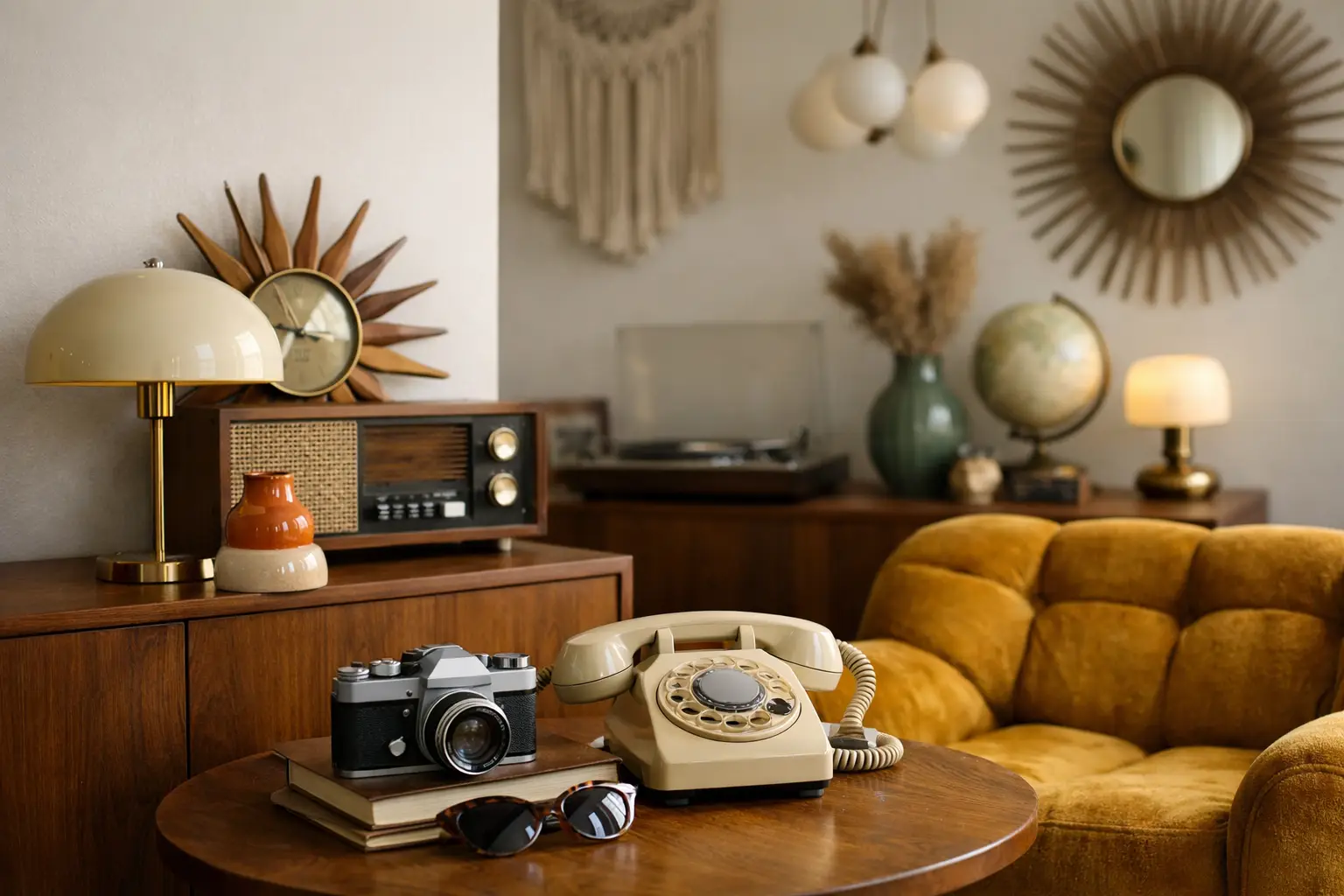
A room with a single exceptional Murano lamp, a patinated brass mirror, or a well-proportioned 1960s sideboard reads differently from one filled with newly made lookalikes. Vintage interior trends 2026 move decisively in that direction: away from complete period recreations and toward interiors built around objects with provenance, material presence, and visual conviction.
The most compelling spaces will not resemble a showroom frozen in one decade. They will pair Italian modernism with older decorative arts, temper clean architectural lines with textured glass, and make room for the irregular beauty of hand-finished surfaces. The point is not nostalgia. It is the pleasure of living with things that have already acquired character.
Vintage Interior Trends 2026: The Return of Edited Rooms
For several years, interiors have embraced warmth after a long cycle of pale minimalism. In 2026, that warmth becomes more selective. The emphasis shifts from simply adding vintage accents to choosing fewer, more substantial pieces that can carry a room.
This is an edited approach to collecting. Rather than filling every corner with decorative objects, a sculptural floor lamp may be allowed to define a reading area. A Venetian glass chandelier can become the central event in a dining room with otherwise restrained furnishings. An antique mirror, chosen for its scale and frame rather than its age alone, can give a contemporary entryway depth and movement.
The distinction matters. A vintage interior should feel assembled over time, but never accidental. Strong silhouettes, quality materials, and the dialogue between objects are more valuable than a crowded collection of references.
Statement lighting takes center stage
Lighting is one of the clearest expressions of the year’s vintage direction. It is functional, architectural, and immediately atmospheric, making it the most efficient way to introduce a period signature into a current interior.
Expect continued interest in Italian lighting from the 1940s through the 1970s, especially pieces in brass, opaline glass, enameled metal, smoked glass, and chrome. Mushroom lamps, adjustable desk lamps, large-scale pendants, and multi-arm chandeliers bring sculptural rhythm even when switched off. Wall sconces are equally significant, particularly in hallways, beside beds, and in pairs framing a mirror or artwork.
The trend is not toward lighting that merely references the past. Collectors and design-conscious homeowners are looking for authentic construction, distinctive proportions, and materials that change beautifully over time. Original patina is often part of the appeal, provided it is stable and appropriate to the piece. Rewiring for local safety standards may be necessary, but excessive polishing or replacement parts can reduce the visual integrity that made the object desirable in the first place.
Murano glass becomes a decorative anchor
Murano glass belongs naturally in the 2026 conversation because it offers both craft history and chromatic richness. In rooms dominated by stone, plaster, linen, and wood, a hand-blown vase or glass lamp introduces a welcome point of luminosity.
The strongest use of Murano is not necessarily symmetrical or formal. A single substantial vase on a low table can hold a room without flowers. A pair of glass sconces can bring color to a neutral bedroom. Chandeliers with clear, amber, pink, or softly opalescent elements create a more layered alternative to standard contemporary fixtures.
Color will be especially considered this year. Tobacco, amber, deep green, cobalt, milky white, and nuanced pinks work well because they respond to natural light rather than simply announcing themselves. The key is restraint. One exceptional glass element has more impact than a scattering of minor decorative pieces.
Warm Woods and Quiet Geometry
The return of darker and warmer wood tones continues, but 2026 favors clarity of form over heavy historical styling. Walnut, teak, rosewood, oak, and lacquered finishes bring visual weight to interiors that have become accustomed to light-toned surfaces.
Mid-Century Modern furniture remains relevant, particularly when it is chosen for its construction and line rather than as a predictable style shortcut. A credenza with refined joinery, a curved Italian lounge chair, or a slim console can sit comfortably beside contemporary upholstery and handwoven textiles. The result feels collected rather than themed.
There is also renewed appreciation for furniture with softened geometry. Rounded cabinets, oval mirrors, low modular seating, and tables with substantial bases counterbalance the strict rectilinear layouts common in renovated homes. These forms make an interior feel more generous and less diagrammatic.
That said, a full suite of matching vintage furniture can make a room feel overly literal. Mixing periods is more persuasive. A 1970s chrome lamp may sharpen the profile of an Art Deco cabinet. An antique giltwood mirror can bring complexity to a pared-back modern console. Contrast gives each piece room to be seen.
Art Deco returns with restraint
Art Deco is reappearing in a quieter, more architectural form. The trend is less about theatrical excess and more about its enduring vocabulary: stepped profiles, fluted surfaces, smoked glass, polished metal, rich veneers, and finely drawn symmetry.
A Deco-era mirror, a pair of geometric sconces, or a lacquered box can introduce that language without turning a room into a period set. These pieces are particularly effective in compact urban interiors, where reflective surfaces and strong vertical forms create presence without requiring volume.
Materials determine whether the result feels refined. Brass, parchment, marble, glass, and figured wood carry the style with credibility. Imitation finishes usually do not. If an original piece has wear, that wear is often preferable to an overly restored surface that has lost its tactile history.
The Appeal of Imperfection and Provenance
The appetite for vintage is also an appetite for distinction. Mass-produced interiors can be visually polished, yet they often lack the small variations that make an object memorable: the depth of old brass, a slightly irregular hand-blown glass form, the softened edge of a wooden drawer pull, or a repaired detail that speaks to decades of use.
In 2026, provenance becomes part of decoration. Buyers increasingly want to understand what they are bringing home: the period, the maker when known, the material, the condition, and the origin. This does not mean every piece must be museum-level or signed by a famous designer. It means the object should have a convincing identity.
Condition always requires judgment. Minor surface wear can be attractive and expected in an authentic vintage piece. Structural instability, damaged wiring, severe veneer loss, or poorly matched repairs demand a more critical assessment. The right choice depends on whether the object is primarily decorative, intended for daily use, or acquired as a collectible.
A curated source such as Sound Of Vintage Italy is valuable precisely because selection narrows the field. The goal is not to own more vintage, but to recognize the piece whose materials, silhouette, and history make it worth placing in a room.
How to Build a Vintage-Led Interior Without Overdoing It
Begin with the room’s anchor. This might be a chandelier, a cabinet, a mirror, or a pair of chairs. Let that item establish a material or period cue, then build around it with calmer supporting elements. If the anchor is ornate, keep the upholstery and surrounding furniture clean. If it is spare and modernist, introduce softness through textiles, artwork, or a more decorative antique element.
Scale deserves as much attention as style. A small lamp on an oversized table disappears; a large chandelier in a low room can feel oppressive. Before choosing a piece, consider its visual reach, not only its measurements. Glass reflects, brass catches light, and a dark wood cabinet may appear heavier than its dimensions suggest.
Finally, allow negative space. A vintage object with a strong silhouette needs air around it. This is particularly true of sculptural lamps, Murano glass, and mirrors. Their value lies partly in what they reflect, illuminate, or frame.
The most lasting interiors of 2026 will not chase a single decade or reproduce an image from a catalog. They will make a thoughtful place for one remarkable object at a time, allowing its age, craftsmanship, and presence to become part of everyday life.