
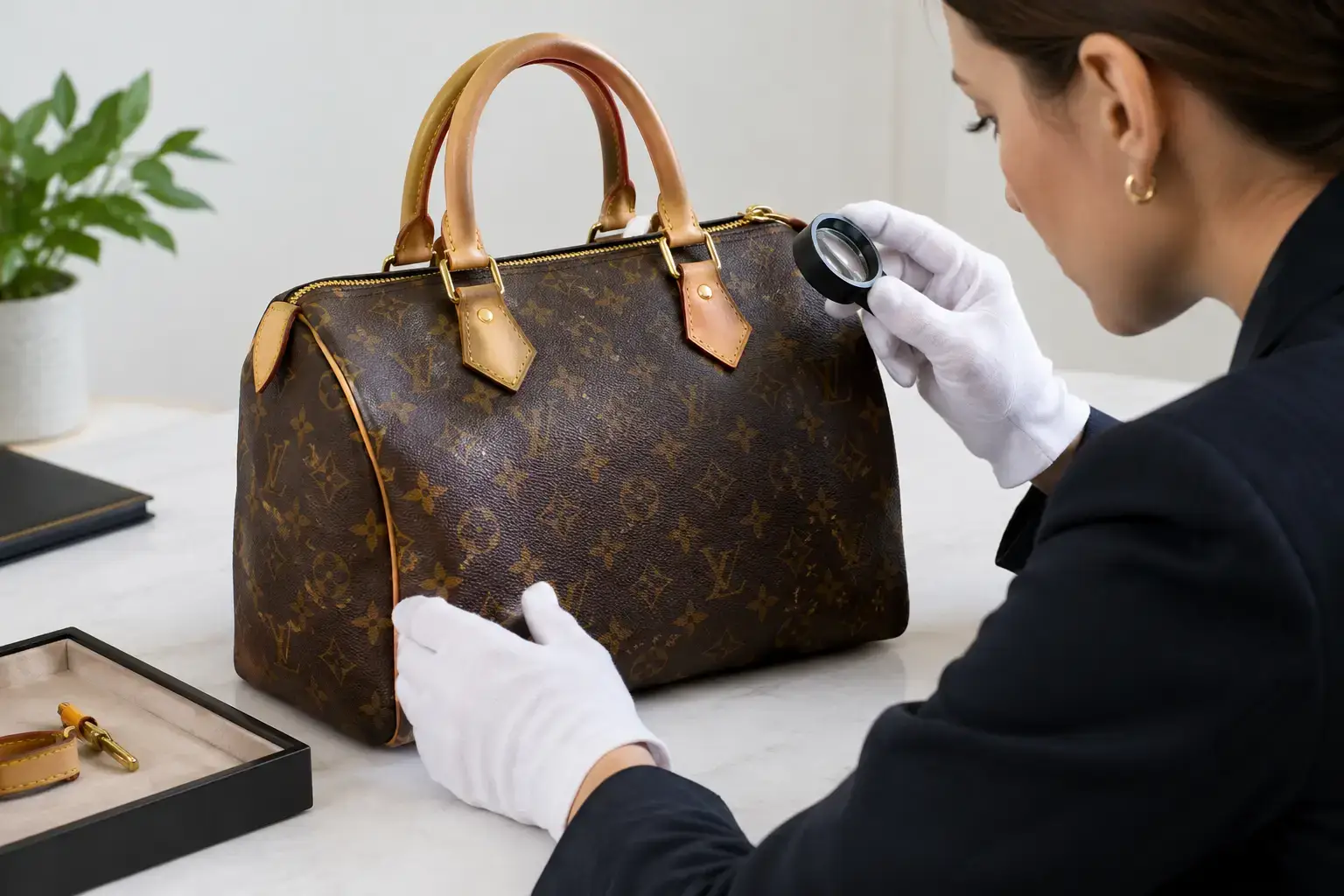
A vintage handbag is never valued by age alone. Two bags from the same decade, made by the same house, can occupy entirely different positions in the market: one is a beautiful accessory, the other a collectible object with lasting desirability. Vintage handbag value emerges from the meeting point of authenticity, condition, rarity, cultural relevance, and design quality. For collectors, the most rewarding pieces offer more than a recognizable name. They carry a precise visual language, a traceable history, and the material presence that only time can create.
What Defines Vintage Handbag Value?
A strong valuation begins with identification. The maker matters, but it is only one element. A bag’s model, production period, materials, hardware, construction, and provenance all help establish where it sits within a designer’s history and within the wider vintage market.
The distinction between simply old and genuinely collectible is essential. A leather shoulder bag from the 1980s may be well made and attractive, yet it may not have the scarcity or recognizable design code required to command a premium. Conversely, an unusual evening minaudière, a limited-run exotic-skin bag, or a distinctly shaped piece from a defining period can become highly sought after even when its original retail price was modest.
In luxury vintage, desirability often concentrates around bags that feel unmistakably of their era while remaining visually persuasive now. A structured Art Deco clutch, a 1960s Italian leather top-handle bag, or a boldly proportioned 1990s piece can each speak to a different collector. Value is shaped by demand, and demand follows both design history and changing taste.
Brand Is a Starting Point, Not a Conclusion
Established luxury houses benefit from global recognition, strong archival identity, and a market of knowledgeable buyers. Yet a prominent label does not guarantee exceptional value. Common models, heavily produced styles, or bags in compromised condition may retain less collector interest than rarer pieces from a lesser-known Italian atelier.
For this reason, discerning buyers look beyond the logo. They examine the quality of the leather, the precision of the stitching, the silhouette, the signature closure, and the relationship between the object and its period. A handbag with anonymous provenance can still be compelling if its craftsmanship and aesthetic character are exceptional. In the world of vintage, authorship is valuable, but design intelligence is equally so.
Condition Can Change the Price Dramatically
Condition is not a superficial detail. It is one of the clearest factors affecting vintage handbag value, particularly for bags made from delicate leather, patent leather, suede, satin, raffia, or embellished textiles. A rare model in poor condition may be difficult to restore without diminishing its originality. A more accessible model in pristine condition can attract immediate interest.
Collectors generally assess the exterior, lining, corners, handles, closures, hardware, and interior compartments. They also look for odors, stains, dryness, color transfer, cracking, missing stones, and evidence of previous repairs. Originality carries weight. A carefully conserved bag with light, honest wear is often more desirable than one that has been aggressively recolored, relined, or fitted with replacement hardware.
There are exceptions. Some older bags were made to be used, and a professional repair can preserve a significant piece for another generation. The question is whether the work respects the original materials and construction. A discreet stabilization of a handle is not equivalent to a wholesale reconstruction. When evaluating a purchase, it is wise to distinguish between patina, which can add character, and damage, which can reduce usability and future appeal.
Rarity Has Several Meanings
A handbag may be rare because few examples were made, because few have survived, or because the exact combination of material, color, and hardware seldom appears on the market. These are not the same thing. A bag may be technically scarce but lack broad demand, while a highly recognizable model may be relatively available yet consistently sought after.
The most interesting pieces often unite rarity with a clear reason to be desired. Think of sculptural metal clasps, hand-beaded surfaces, unusual frame constructions, distinctive Italian leathers, or period-specific decorative motifs. Limited editions and runway-associated designs can also be important, provided their documentation is credible.
Color deserves particular attention. Black and neutral tones tend to have broad commercial appeal, but an unusual archive color can be more valuable when it is integral to a model’s identity. A saturated lacquer red, a refined tobacco suede, or a rare Murano-like jewel tone may give a bag a stronger decorative presence than a conventional version.
Provenance and Authenticity Create Confidence
A handbag’s story can materially influence its value. Original receipts, dust bags, mirrors, care cards, date codes where relevant, and period packaging are not always essential, but they strengthen confidence and can support a higher price. Provenance becomes especially meaningful for rare pieces, bags with unusual materials, or objects connected to a notable private collection.
Authenticity should be considered with precision rather than assumption. Labels, stamps, serial formats, hardware engravings, linings, stitching, and construction details must be consistent with the claimed period and maker. Vintage production was not always as standardized as contemporary manufacturing, so small variations can occur. Still, inconsistencies in typography, materials, proportions, or finishing deserve close scrutiny.
A thoughtful seller documents what can be known and avoids inventing certainty where records are incomplete. This is particularly important with older Italian bags, whose smaller workshops may have produced exquisite work without the extensive archival systems associated with international luxury houses. An unsigned piece can still be excellent. It should simply be presented for what it is: a well-made object with specific aesthetic and material qualities.
Design Relevance Outlasts Fashion Cycles
The vintage market moves in cycles, but certain bags remain desirable because their forms are resolved with unusual clarity. Their appeal is not dependent on a temporary trend. They work as objects of fashion history and as part of a contemporary wardrobe.
The strongest examples often have a defined silhouette: a precise box clutch, a softly folded hobo, an architectural frame bag, or a compact top-handle form with exceptional hardware. Their proportion, balance, and tactility make them satisfying to hold and to display. For a collector who appreciates interiors as much as fashion, this matters. A beautiful handbag can occupy a dressing room, bookshelf, or console with the same visual authority as a small decorative object.
This is where vintage accessories intersect naturally with the language of design. Material depth, craftsmanship, line, and period character matter as much as brand recognition. At Sound Of Vintage Italy, this perspective is central to a selection that treats fashion accessories not as disposable additions, but as objects with cultural and decorative presence.
How to Assess a Bag Before Buying
Before deciding whether a bag is fairly priced, compare it with examples of the same model, period, material, and condition. Broad online price ranges can mislead because a single listing may omit essential details. A bag with intact corners, original lining, complete hardware, and verified authenticity is not directly comparable to one with a damaged handle or altered interior.
Ask for clear images of the areas most likely to reveal wear: base corners, handle attachments, zipper pulls, clasp mechanisms, interior labels, and linings. Request measurements as well. Scale can alter desirability, especially with evening bags and top-handle styles that may feel more decorative than practical by contemporary standards.
It is also useful to consider the purpose of the purchase. A bag intended for regular use should be structurally sound and suited to your habits. A collector’s piece may be worth acquiring for its rarity, even if it is best reserved for occasional wear or display. Neither approach is more valid, but they lead to different decisions about condition, restoration, and price.
Preservation Protects Long-Term Appeal
Once acquired, a vintage handbag should be stored with care. Keep it away from direct sunlight, excessive heat, humidity, and plastic coverings that can trap moisture. Lightly fill the interior with acid-free tissue to preserve its shape, and avoid overstuffing. Chains and metal handles should be wrapped separately so they do not mark leather or fabric.
Regular use can be beneficial when it is gentle and considered. Rotate bags, avoid contact with hand cream or perfume, and do not hang heavy bags by their handles for long periods. For delicate materials, professional conservation is often preferable to improvised cleaning. The aim is not to make a vintage bag look new. It is to preserve the integrity that makes it valuable.
The most memorable handbags retain something beyond market price: an exact expression of craft, era, and personal taste. Choose the piece whose materials, proportion, and history continue to hold your attention. That kind of recognition is often where lasting value begins.