
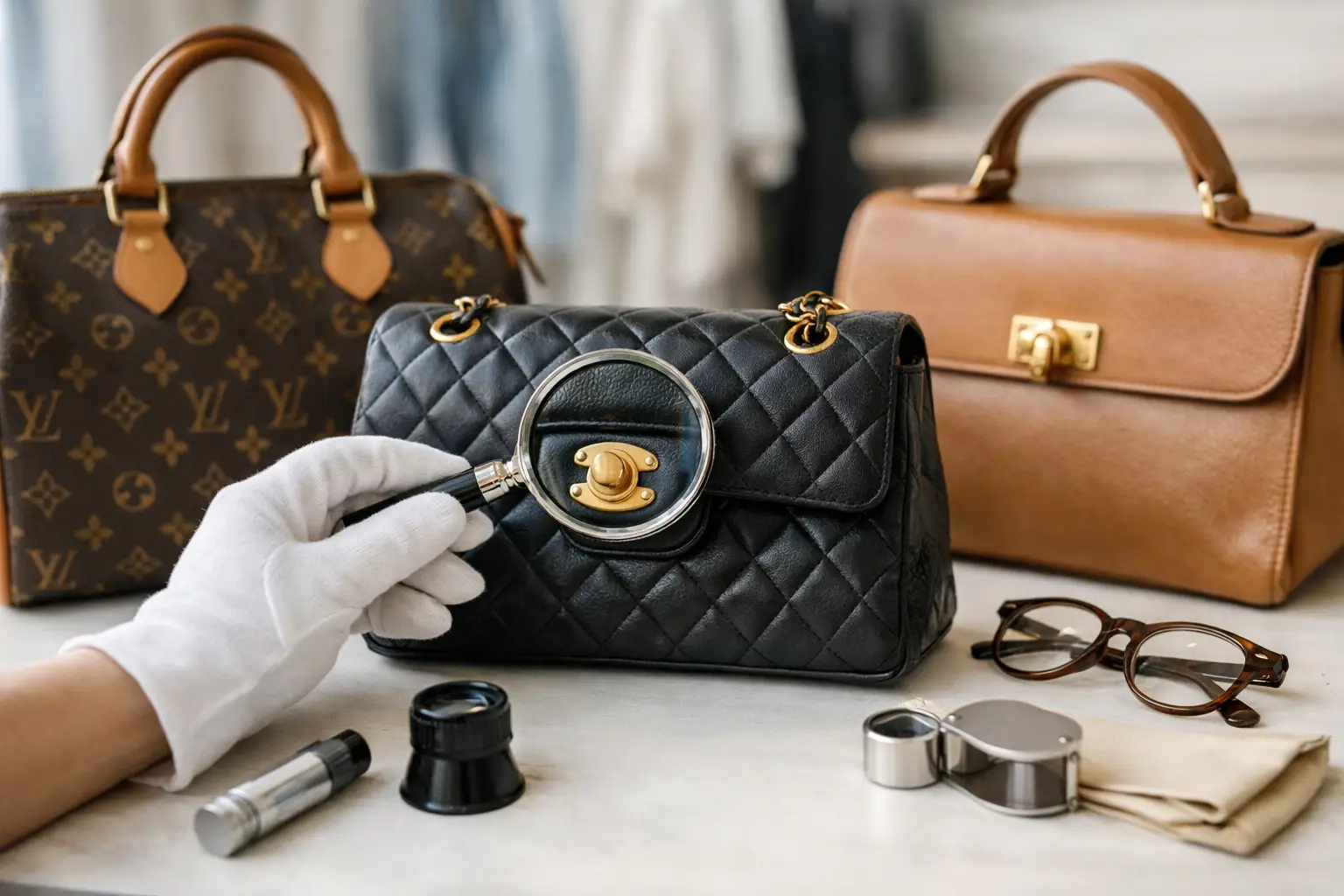
A vintage handbag can carry far more than a recognizable name. Its value often lives in the quality of a clasp, the patina of a handle, the particular grain of a leather, or the proportions that place it precisely within a decade. Learning how to authenticate vintage handbags is therefore less about finding one decisive mark and more about reading an object as a whole.
For collectors, the most persuasive bags are coherent. Materials, construction, hardware, lining, labeling, and wear should all belong to the same story. A single detail may be imperfect or replaced over time, particularly on a bag that has been loved for fifty years. But when several details feel out of place, caution is warranted.
How to Authenticate Vintage Handbags by Looking First
Begin with the overall silhouette. Before inspecting a logo or serial number, ask whether the shape, scale, and construction correspond to the house and period attributed to the piece. A 1960s top-handle bag, for example, may have a more structured body, a compact frame, and a distinctly formal proportion that differs from a 1990s shoulder bag by the same maker.
Study reference images from reliable period sources when possible: advertising campaigns, old department-store catalogs, runway photographs, and documented examples held by established dealers. Do not rely on a single online listing. Counterfeiters often reproduce a familiar model name while missing the details that give an original its correct balance.
The same discipline applies to bags without a famous fashion label. Italian leatherwork, tapestry bags, beaded evening pieces, and mid-century accessories can be authenticated through design language and workmanship. The curve of a frame, the style of a kiss-lock closure, and the weave of a lining may reveal more than a label alone.
Read the Materials, Not Just the Brand Name
Authentic vintage handbags generally feel intentional in the hand. Leather should have depth rather than a flat, plastic surface. Natural aging can bring softness, slight darkening at edges, gentle creasing, and a mellow sheen. It should not be confused with damage: peeling coatings, sticky finishes, or a strong chemical odor indicate condition concerns, whether or not the bag is genuine.
Canvas and coated textiles should have a consistent texture and print. Examine repeated motifs closely. On an authentic bag, alignment is often considered across seams, panels, pockets, and flaps, though the exact standard depends on the maker and the era. A perfectly centered pattern is not universal proof of authenticity, just as a slightly interrupted motif is not automatically a warning sign. Construction methods changed, and some original vintage pieces were made with practical compromises.
Lining is equally revealing. Look for a fabric appropriate to the period and model: leather, suede, satin, faille, canvas, or branded textile may all be correct in different contexts. A lining that appears newly installed, uses a modern synthetic material, or clashes with the exterior can suggest a later repair. Repairs are not necessarily disqualifying, but they should be disclosed and reflected in the price.
Smell is a modest but useful clue. Older leather and textiles often retain a dry, material-specific scent. Heavy perfume, mildew, solvent, or glue can point to storage problems, restoration, or a recently manufactured imitation. Never make a decision from scent alone, but include it in the broader evaluation.
Construction Reveals the Hand of the Maker
Turn the bag inside out visually, even if you cannot physically handle it. Stitching should be neat, suitably dense, and consistent in tension. Slight irregularity can occur in handmade vintage work, especially on older leather goods, but loose threads, skipped stitches, uneven spacing, and excess adhesive deserve scrutiny.
Examine the edges. Quality leather bags may show painted edges, folded leather, piping, or carefully finished raw cuts, depending on their age and design. The finishing should appear integrated with the bag, not applied hastily to conceal poor construction. Corners are particularly informative because they receive the most abrasion. Honest wear tends to soften and darken exposed areas gradually; artificial distress often looks abrupt, repetitive, or strangely uniform.
Handle attachments and strap anchors matter. They must be strong enough for the bag’s design and should match the wear found elsewhere. Bright replacement rivets on a deeply aged body, or a strap that is markedly newer than its hardware, may indicate intervention. Again, restoration is common in vintage accessories. The question is whether the work is sympathetic, transparent, and appropriate to the object.
Inspect Hardware, Stamps, and Serial Details
Hardware should have weight, clean casting, and an appropriate finish. Vintage metal may show light scratches, tarnish, fading, or plating wear, especially on clasps and chain links. What it should not usually show is flaky paint, sharp unfinished edges, or lettering that looks shallow and indistinct.
Compare all visible metal elements. Zippers, clasps, feet, screws, rings, and logo plaques should make sense together in tone, style, and aging. A bag may have had a zipper replaced during its lifetime, so a single mismatch is not final proof of a fake. Yet multiple mismatched components can indicate that the bag was assembled from unrelated parts.
Brand stamps require close attention. Original markings are generally crisp, proportionate, and properly placed, but their appearance varies greatly by decade. Fonts evolved, country-of-origin lines changed, and some early bags carry little or no branding beyond a small interior stamp. Avoid broad rules such as “every authentic bag has a serial number.” Many genuine vintage handbags predate modern coding systems, while counterfeit bags may include convincing-looking codes precisely because buyers expect them.
If a serial number, date code, or authenticity tag is present, assess it within the design’s known production history. Check the format, placement, typography, and method of application. A code is supporting evidence, not a shortcut to certainty.
Provenance Adds Confidence, but It Is Not a Guarantee
A receipt, original box, dust bag, care card, or boutique label can strengthen a handbag’s story. These materials are especially useful when they align with the bag’s period, model, and condition. Still, accessories can be separated from the original piece, and paperwork can be reproduced. Treat provenance as one layer of evidence rather than a verdict.
Ask sellers for clear photographs of exterior panels, corners, hardware, interior lining, stamps, zipper pulls, and any areas of wear. A carefully presented object should withstand close viewing. Vague descriptions, heavily filtered images, or resistance to showing details are more telling than the absence of packaging.
For a significant purchase, the seller’s expertise matters. A specialist who identifies period, material, dimensions, condition, alterations, and provenance gives you a basis for judgment. At Sound Of Vintage Italy, selection begins with this kind of object-led reading: the aim is not simply to recognize a name, but to understand the integrity and visual character of a piece.
Know When an Expert Opinion Is Worth It
Independent authentication is most useful when a bag is rare, highly valuable, unusually pristine, or accompanied by conflicting details. It is also wise when buying remotely from an unfamiliar source. A professional opinion can protect the investment, but it should be based on high-resolution images, measurements, and, ideally, physical inspection rather than a quick glance at one label.
Be realistic about what authentication can and cannot answer. It may establish that a handbag is genuine while leaving open questions about later repairs, replaced parts, or its precise production year. Condition appraisal is separate from authenticity, and both affect value. A genuine bag with compromised leather or extensive restoration may still be beautiful, but it should be valued differently from an untouched example.
The most reliable habit is patience. Let the leather, lining, hardware, proportions, and history speak to one another before you decide. The right vintage handbag does not need a dramatic claim to persuade you. Its authenticity is usually visible in the quiet consistency of the details.