
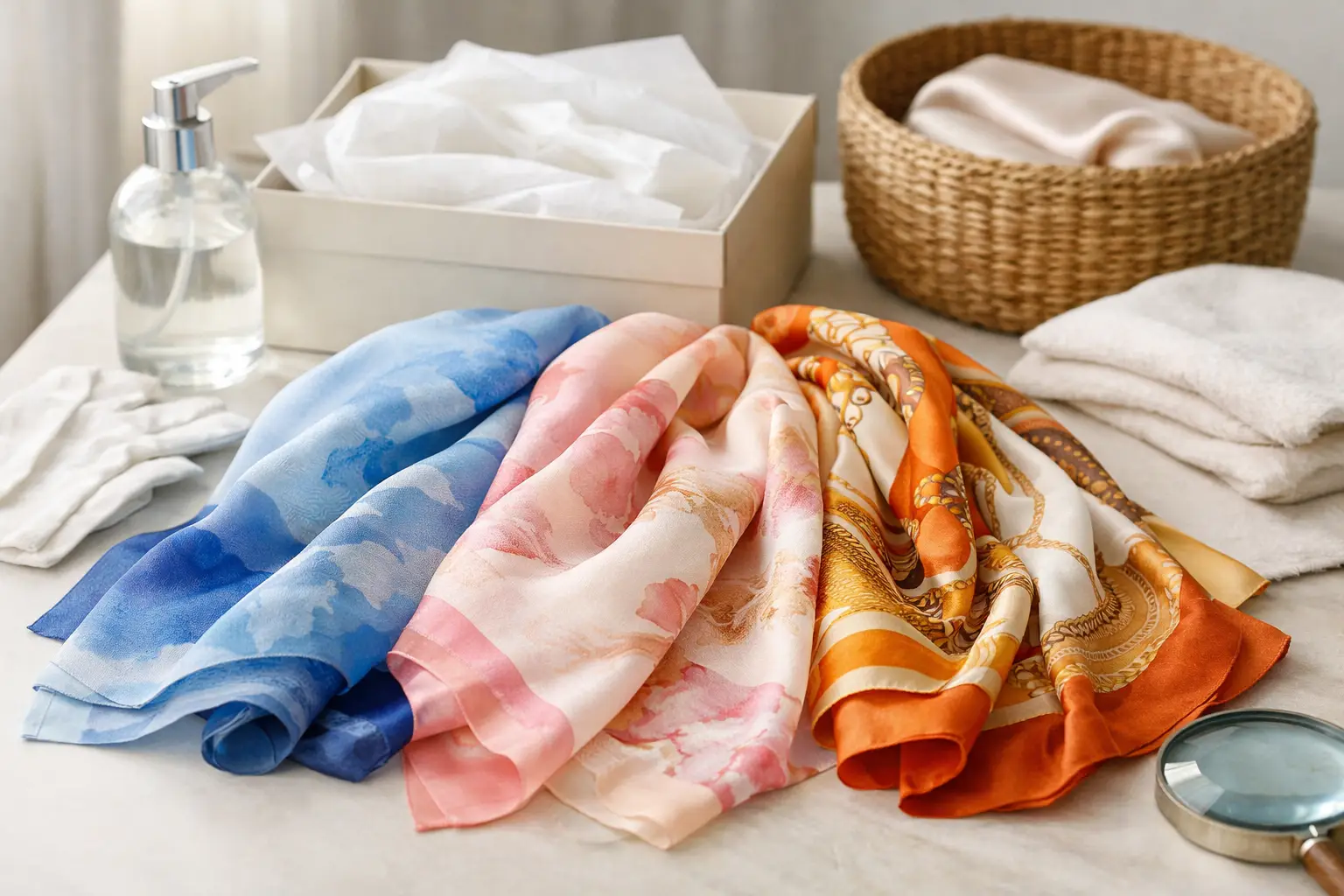
A silk scarf can hold an entire visual language in a square of fabric: a saturated Hermès-inspired equestrian print, an Art Déco border, an exuberant 1970s floral, or a hand-painted Italian motif. Knowing how to preserve silk scarves means protecting more than their surface. It means retaining the clarity of the color, the fluid hand of the weave, and the small signs of provenance that give a vintage accessory its presence.
Silk is strong for its weight, but it is not indestructible. Sunlight can mute even the most vivid dyes; moisture and heat can leave permanent marks; careless folding can create stress lines along a fragile old weave. A thoughtful routine is therefore less about constant intervention and more about preventing the few conditions that cause lasting damage.
Begin With an Honest Condition Check
Before cleaning or storing a scarf, examine it in diffuse natural light. Look closely at the fold lines, corners, hand-rolled edges, and any area where a brooch, knot, or handbag handle has repeatedly made contact. Older scarves may show pinholes, thinning silk, color transfer, makeup residue, perfume staining, or a faint yellowing that is most visible in ivory and pastel grounds.
This first assessment determines what is appropriate. A modern, colorfast silk twill scarf in excellent condition can often tolerate gentle hand washing. A vintage printed scarf with uncertain dyes, metallic details, hand-painted decoration, or brittle areas should be treated as a collectible textile. In that case, cleaning is not automatically the right answer. A minor, stable mark may be preferable to a larger faded patch or a distorted finish caused by aggressive treatment.
If the scarf carries a maker’s label, retain it. The label can help establish age, material, and care history, while also adding to its collectibility. Photograph distinctive details and existing flaws before any cleaning. This is especially useful for scarves acquired as part of a vintage fashion collection, where condition is part of the object’s story.
How to Preserve Silk Scarves Through Cleaning
Silk does not benefit from frequent washing. Clean a scarf only when it has visible soil, a spill, or a persistent odor. Between wears, air it for several hours in a clean room away from direct sun, steam, cooking odors, and open windows. This simple pause often eliminates the need for unnecessary laundering.
For a washable scarf, use cool water and a very small amount of detergent formulated for silk or delicate fabrics. Test an inconspicuous corner first by dampening it with a white cloth. If color appears on the cloth, do not immerse the scarf. Professional textile care is the safer choice.
When hand washing is suitable, move the scarf gently through the water for only a few minutes. Do not rub, twist, scrub, or leave it to soak. Rinse in cool water until the water runs clear, then support the fabric fully as you lift it out. Silk is more vulnerable when wet, and pulling it from one corner can stretch the weave.
Lay the scarf flat on a clean white towel, roll the towel loosely to absorb excess water, then reshape the scarf on a second dry towel. Keep it out of direct sunlight and away from radiators, heated floors, or forced air. Never wring silk, and avoid a dryer. The heat can set creases, alter the finish, and weaken older fibers.
Dry cleaning has its place, but it is not a universal solution. It can be appropriate for structured scarves, heavily soiled pieces, or designs with complex embellishment. However, repeated dry cleaning may gradually affect texture or color. Choose a cleaner experienced with luxury silk and vintage textiles, and point out any known stains, fragile areas, or unstable trims before leaving the piece.
Pressing Without Flattening the Character
A lightly wrinkled scarf is best pressed while it is still faintly damp, using a low silk setting and a clean pressing cloth. Iron on the reverse whenever possible, especially with printed or hand-painted designs. Keep the iron moving and avoid steam unless the maker’s instructions explicitly allow it.
For vintage scarves with rolled hems or a soft, naturally irregular finish, do not chase absolute flatness. Over-pressing can make the fabric look lifeless and can flatten the dimensional edge that distinguishes a finely finished scarf. The goal is composure, not a factory-new surface.
Store Silk Away From Light, Pressure, and Plastic
Storage is where most preservation happens. The ideal environment is cool, dry, dark, and stable. Avoid attics, basements, garages, and closets that share a wall with a bathroom. Extreme shifts in humidity encourage mildew, while excessive dryness can make very old fibers feel brittle.
For valuable or delicate scarves, store them flat in an archival-quality box lined with unbuffered, acid-free tissue. Unbuffered tissue is preferable for silk because it does not contain the alkaline reserve used for some paper materials. Place a layer of tissue between scarves so prints and darker dyes do not transfer onto lighter pieces.
If space requires folding, make broad folds and place soft rolls of tissue inside each fold to reduce sharp creases. Refold the scarf along different lines once or twice a year, particularly if it will remain stored for a long period. For scarves in regular rotation, rolling around an archival tissue tube is another elegant option, provided the roll is loose and protected from dust.
Do not keep silk in ordinary dry-cleaning bags, sealed plastic bins, or plastic zipper bags for long-term storage. Plastic can trap moisture and restrict airflow. Avoid wire hangers, too, as they create permanent stress at the fold point. A padded hanger may work briefly for styling or steaming, but flat storage remains the best long-term choice for most scarves.
Keep Fragrance and Pests at a Distance
Perfume, hairspray, body oils, and deodorant can permanently alter silk, so allow skincare and fragrance to dry fully before tying a scarf. Cedar blocks, scented sachets, and mothballs may seem protective, yet their oils and fumes can transfer to textiles. Clean storage, periodic inspection, and tightly maintained household hygiene are more reliable defenses against insects.
If you suspect moth activity, isolate the item rather than applying treatments directly to the scarf. Look for tiny holes, loose fibers, or web-like residue in surrounding textiles. Professional conservation advice is sensible for a valuable vintage piece, particularly one with a rare print or documented provenance.
Display Scarves as Textiles, Not Decorations to Sacrifice
A remarkable silk scarf can bring color and graphic depth to an interior, particularly when its palette speaks to Murano glass, lacquered furniture, or a carefully chosen vintage lamp. Display is possible, but it comes with a clear trade-off: light exposure is cumulative.
Never hang a silk scarf in a sunny window or directly beneath a strong lamp. If framing one, use UV-filtering glazing, acid-free mounting materials, and a method that supports the textile without glue, tape, or pins. The frame should be kept away from heat sources and rotated out of display periodically. A scarf that remains on a wall year-round will age differently from one stored in darkness.
For temporary styling, a scarf draped over a chair, folded on a console, or tied loosely around a basket can be more forgiving than permanent display. Return it to proper storage after an event or a season. This approach allows the textile to participate in a room while respecting its material limits.
Wear With Care, Then Let the Scarf Rest
The most effective preservation practice is often the least formal: wear a silk scarf with clean hands, avoid sharp jewelry, and untie knots rather than pulling them apart. When using it around the neck, vary the fold and knot placement so the same areas are not repeatedly strained. If it is worn as a bag accent, avoid allowing it to rub against hardware, rough leather edges, or dark denim that may transfer dye.
After wearing, unfold the scarf and let it rest on a clean, flat surface before putting it away. A few hours of airing helps release moisture from the fibers and reduces the risk of trapping perfume or skin oils inside a fold.
A well-preserved scarf should not feel embalmed or inaccessible. It should remain ready to be worn, styled, admired, and passed on. Give it darkness when it needs rest, gentle handling when it is in use, and the dignity of space rather than compression. That balance lets silk keep its color, movement, and unmistakable vintage character for years to come.