
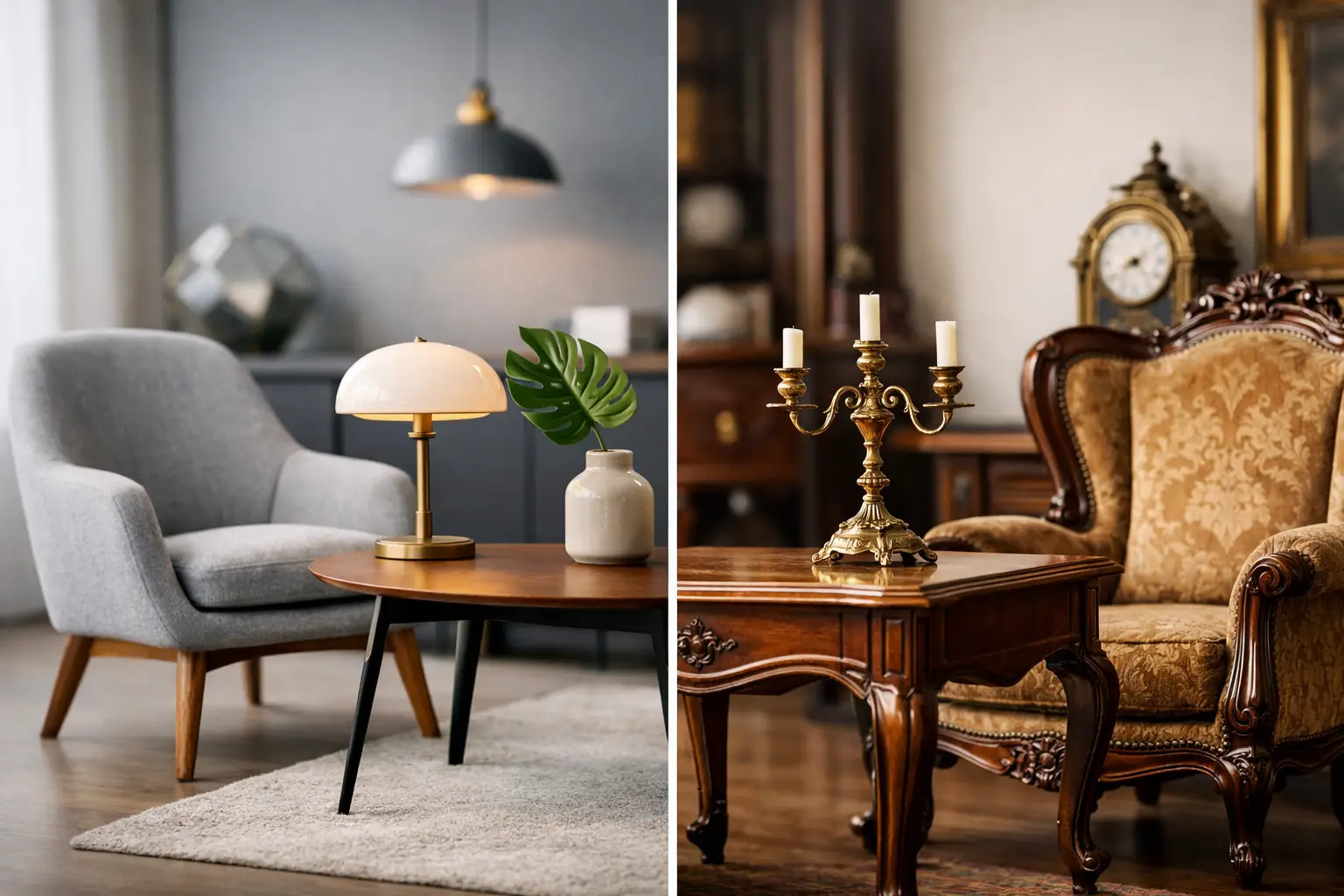
A brass floor lamp with a sculptural 1970s silhouette creates a very different presence from an inlaid 19th-century walnut console, even when both occupy the same entryway. The question of modernariato vs antique furniture is not simply about age. It is about visual language, production culture, rarity, and the atmosphere an object brings into a room.
For collectors and design-led homeowners, the distinction is useful because it makes buying more intentional. An antique may introduce craftsmanship, patina, and historical depth. A modernariato piece can establish a sharper architectural rhythm through its proportions, materials, and distinctly 20th-century point of view. Neither is inherently more valuable or more desirable. The right choice depends on the object, its condition and provenance, and the interior it is meant to inhabit.
Modernariato vs Antique Furniture: The Essential Difference
In the Italian market, modernariato generally refers to collectible design and decorative arts of the 20th century, often from the 1920s through the 1980s. It includes Mid-Century Modern seating, Italian lighting from the 1950s and 1960s, postwar glass, Art Deco furniture, chrome and brass accessories, and studio pieces that reflect the materials and ideas of their era.
Antique furniture, by contrast, usually describes objects made in earlier historical periods. In the United States, an item often needs to be at least 100 years old to qualify as an antique in a formal commercial or customs context. In everyday design language, however, the term is also used more broadly for furniture associated with periods such as Louis XV, Empire, Victorian, Biedermeier, or early Art Nouveau.
The boundary is not always absolute. A 1920s Art Deco cabinet may be cataloged as antique by one dealer and as early modernariato by another. What matters is that the object is described precisely: its approximate date, maker when known, materials, construction, and condition should be clear. Labels are useful, but an informed eye should always go further than the label.
Antique furniture speaks through heritage
Antique furniture often carries the marks of traditional cabinetmaking. Hand-cut joinery, carved details, marquetry, veneered surfaces, original locks, and aged woods are not merely technical features. They form part of the object’s character. A well-preserved 19th-century commode can bring gravity to a contemporary room precisely because it was made according to a different pace and a different idea of ornament.
Its visual strength tends to lie in detail, craftsmanship, and patina. Antique pieces are particularly compelling in rooms that need warmth, layered texture, or a deliberate contrast to clean contemporary architecture. They also reward close viewing. The grain of a walnut veneer, the irregularity of handwork, and the softened edges created by use are part of their appeal.
Modernariato speaks through design
Modernariato places greater emphasis on form, function, and material experimentation. A 1960s Italian armchair may be defined by a low, confident profile. A Murano glass lamp may turn illumination into a sculptural event. A lacquered sideboard, tubular-metal chair, or geometric mirror can immediately establish the period identity of a room.
This category is closely connected to the history of industrial design, even when an object was made in a small workshop. Postwar designers worked with new possibilities in chrome, aluminum, molded plastics, smoked glass, lacquer, foam, and engineered wood. The result is furniture that often feels direct, graphic, and surprisingly current.
For a US interior, modernariato can be an elegant alternative to reproductions of Mid-Century style. An original piece has its own proportions, material quality, and evidence of a specific era. It does not need to be pristine or famous to be convincing, but it should have a clear identity.
How Materials Change the Character of a Room
The material palette is often the quickest way to feel the difference between modernariato and antique furniture. Antiques tend toward solid woods, figured veneers, giltwood, marble, bronze mounts, leather, and hand-finished surfaces. Their palette is rich, tactile, and developed over time.
Modernariato often introduces contrast. Think of a dark rosewood credenza against white plaster, a polished chrome lamp beside natural linen, or a vivid Murano glass vase on a restrained travertine table. These materials can make an interior feel more edited, especially when the architecture is neutral.
That does not mean antique furniture must belong in traditional rooms or that modernariato requires a strictly modern setting. Some of the most memorable interiors combine the two. A refined Empire desk can anchor a space with a 1970s Italian light above it. A mid-century console can give clarity to a room with an ornate antique mirror. The connection comes from scale, color, and quality rather than matching dates.
Condition Is Not the Same as Perfection
Age should be visible, but it should not compromise the use or integrity of a piece. This principle applies across both categories. Original patina, slight oxidation, small surface irregularities, and the softened sheen of old wood can be desirable. They confirm that the object has lived through time rather than being artificially aged.
The question is whether wear is honest and stable. On antique furniture, look for signs of thoughtful restoration rather than heavy refinishing that removes historical character. Check that drawers operate correctly, veneers are secure, and any repaired areas are compatible with the piece. Structural soundness matters most for seating, tables, and storage furniture that will be used every day.
With modernariato, originality is equally important. Original upholstery may be valuable, yet foam, fabric, wiring, or finishes sometimes require careful renewal for safety and practical use. A vintage floor lamp with newly rewired electrical components can be a more responsible choice than one with fragile original wiring. The best restoration preserves the design while making the object suitable for contemporary life.
For lighting, always distinguish between a minor surface mark and a crack, chip, or electrical issue. In Murano glass especially, clarity about the condition of shades, pendants, and decorative elements is essential. The romance of vintage never justifies overlooking structural or safety concerns.
Provenance, Attribution, and the Value of Certainty
An object becomes more compelling when its story is credible. Provenance may be as simple as a documented estate history, an original label, a maker’s stamp, or a well-supported attribution. It can also relate to a recognizable school, region, workshop, or design movement.
For antique furniture, provenance can illuminate period and craftsmanship. For modernariato, it may establish a connection to a designer, manufacturer, or celebrated Italian production center. Yet an unsigned object is not automatically less worthy. Many exceptional pieces were produced by skilled workshops that left no easily traceable mark.
What should change is the language around the piece. A signed or documented work can be presented with confidence. An unattributed item should be valued for what can be observed directly: the quality of execution, the material, the date range, and the visual strength. Responsible curation depends on this distinction.
At Sound Of Vintage Italy, the appeal of a selected object lies not only in a famous name but also in its ability to hold a room. A rare Sicilian decorative piece, an expressive vintage lamp, or a beautifully made Art Deco mirror can have lasting presence without needing to be reduced to a trend.
Choosing for Collection or Daily Living
The best purchase begins with an honest question: should this piece be the focal point, or should it support the composition of the room? A large antique armoire demands visual and physical space. It may be extraordinary, but a smaller apartment may benefit more from an antique mirror, side table, or pair of sconces that brings the same historical note without overwhelming the plan.
Modernariato is often easier to integrate into contemporary layouts because its scale can feel more familiar. Still, a low vintage sofa may not suit every body type, and an original dining chair may not meet the comfort expectations of daily family use. Design value and practical value should be considered together.
Before choosing either category, consider the room’s light, ceiling height, existing finishes, and circulation. A dark antique chest can be magnificent under warm, directional light but appear heavy in a narrow, poorly lit hallway. A glass-and-chrome modernariato table can open up a compact dining area, though it may feel cold without wood, textiles, or softer surrounding elements.
The most successful interiors do not treat historical furniture as a costume. They allow one exceptional object to carry its own period identity, then give it enough space to be seen. A piece with real age or real design intelligence rarely needs excessive decoration around it.
Choose the object that makes you pause for a second look: the chair with an unforgettable line, the cabinet whose surface has matured beautifully, the lamp that changes the room after sunset. That moment of recognition is often a better guide than a category alone.