
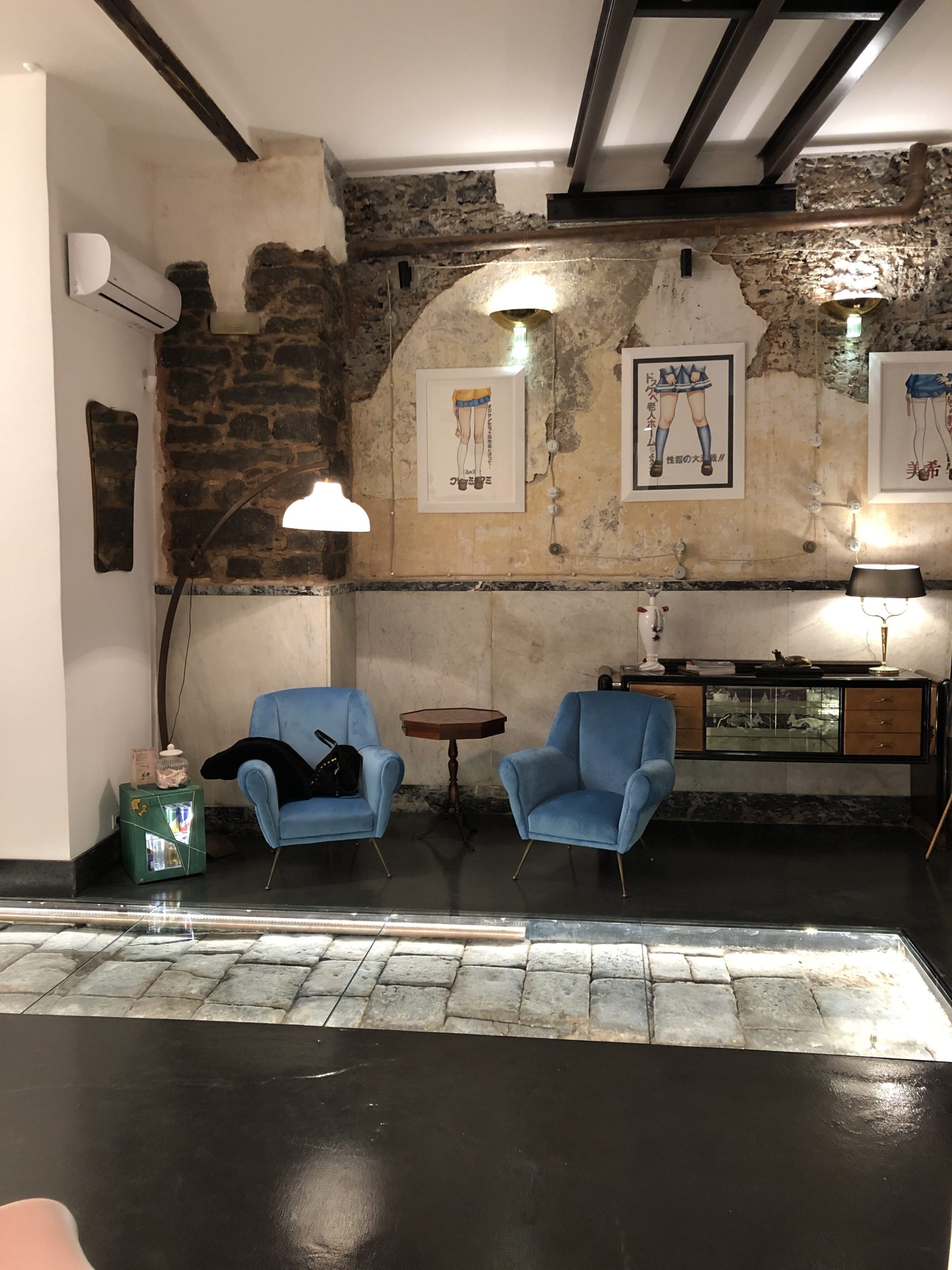
A room changes the moment a truly resolved piece enters it. Not simply a vintage chair, not merely a sleek credenza, but designer mid century furniture with proportion, intention, and presence. The difference is immediate – cleaner lines, better balance, and that rare sense that an interior has found its center without trying too hard.
Mid-century design remains widely imitated because it still answers a modern need: furniture that is functional, visually disciplined, and warm rather than sterile. Yet the phrase is often used too loosely. For collectors, designers, and buyers with a sharper eye, the real question is not whether a piece looks mid-century. It is whether it carries the authorship, material quality, and formal intelligence that give the period its enduring authority.
What defines designer mid century furniture
Designer mid century furniture belongs to a very specific visual and cultural language. Most pieces associated with the period date from roughly the 1940s through the 1970s, with variations across Italy, Scandinavia, France, the United States, and Central Europe. The strongest examples reflect a confidence in line and construction. They do not rely on ornament to justify themselves.
What distinguishes the designer level from generic vintage is authorship and execution. A cabinet by a known maker, a chair linked to a recognized design vocabulary, or a lighting piece produced with high-level craftsmanship offers something beyond style alone. There is usually a more refined relationship between material and silhouette. Teak, walnut, rosewood, brass, chrome, lacquer, glass, and upholstery were not chosen for trend value. They were used to create rhythm, contrast, and permanence.
Italian pieces, in particular, often hold a special place within this category. They tend to introduce greater sculptural freedom, bolder contrasts, and a dialogue between utility and decorative force. A sideboard can read as architecture. A floor lamp can behave like a statement piece even when switched off. That tension between restraint and sensuality is one reason Italian modernism still feels so persuasive in contemporary interiors.
Why designer mid century furniture still matters
The appeal is not nostalgia alone. Good mid-century design remains relevant because it solved practical problems with uncommon elegance. Storage was streamlined, seating was human-scaled, and surfaces were designed to work in real homes rather than in theatrical settings. Even today, many interiors benefit from that discipline.
There is also a cultural reason these pieces continue to circulate at the high end of the market. They represent a period when industrial production, artisanal finish, and design authorship met in unusually successful ways. Some objects were experimental, others understated, but the best examples still feel complete. They do not need reinterpretation to justify their place.
For buyers furnishing a home now, this matters. Designer furniture from the mid-century period tends to anchor a room without overfilling it. A well-scaled desk, pair of armchairs, or vintage console often does more than a larger quantity of newer furniture. It establishes hierarchy. It gives the room a point of view.
How to recognize quality beyond the label
The market is crowded with pieces described as “mid-century” simply because they have tapered legs or a warm wood finish. That is not enough. Serious selection starts with construction, proportions, and the coherence of the design.
Look first at structure. Drawers should feel thoughtfully built, not shallow or decorative. Joinery should suggest intention. Hardware, edges, and transitions between materials should be resolved rather than merely acceptable. In seating, the frame matters as much as the upholstery. If the silhouette is strong, the piece keeps its authority even when reupholstered.
Scale is equally revealing. One of the signatures of the best mid-century furniture is visual lightness paired with actual substance. A credenza may appear almost suspended, yet carry considerable material weight. A lounge chair may feel generous without becoming bulky. When proportions are wrong, the piece loses that composure immediately.
Patina should be read carefully. Wear is not a defect when it confirms age and use with dignity. Minor marks, soft oxidation on brass, and a lived-in finish can support authenticity and aesthetic depth. Damage, however, is different. Veneer loss, unstable construction, poor restoration, or replaced elements that compromise the original character should be assessed honestly. In this category, condition and integrity are always in conversation.
The pieces worth prioritizing
Not every room needs a full mid-century scheme. In fact, the strongest interiors rarely look assembled from a single decade. They rely on selected pieces with enough identity to shape the atmosphere.
Storage furniture is often the most effective starting point. Sideboards, cabinets, bars, and credenzas deliver immediate architectural impact while remaining highly usable. They can define a dining room, refine a hallway, or bring order to an open-plan living area. When chosen well, they function almost like low horizontal sculptures.
Seating comes next, especially lounge chairs, dining chairs, and compact sofas. This is where design language becomes tactile. The curve of an armrest, the angle of a back, or the profile of a base changes how the entire room is read. A single designer armchair can create a stronger statement than a complete matched set of less resolved pieces.
Lighting deserves special attention. Mid-century interiors were never only about furniture in the narrow sense. Lamps, sconces, and chandeliers often provided the emotional temperature of the room. Murano glass, brass structures, and sculptural shades bring a richness that wood furniture alone cannot produce. For a collector with an eye for atmosphere, lighting is often the category that completes the composition.
How to place designer mid century furniture in a contemporary home
The instinct to make everything period-correct usually weakens the result. Designer mid century furniture performs best when it has room around it. A 1950s Italian sideboard can sit beautifully beneath contemporary art. A pair of 1960s chairs can sharpen a room with raw plaster walls or minimalist shelving. The point is not reproduction. It is tension, balance, and visual intelligence.
This is especially true in homes that already contain diverse references. Mid-century pieces can mediate between antique elements and newer architecture because their forms are clear and adaptable. They rarely feel fussy. At the same time, they are not neutral. They bring enough character to prevent contemporary interiors from slipping into anonymity.
There are trade-offs, of course. A highly collectible piece may be less forgiving in daily use than a newly manufactured alternative. Certain wood finishes require more attention. Upholstery may need updating. Dimensions can also be more compact than what some buyers expect today. None of this is a reason to avoid the category. It simply means selection should respond to how the room is actually lived in.
Italian taste and the value of curation
In a saturated market, curation matters almost as much as the object itself. The best designer mid century furniture is not just bought. It is recognized. Provenance, period consistency, design quality, and decorative presence all have to align.
This is where an Italian curatorial sensibility remains especially compelling. Italy has long treated furniture, lighting, and decorative arts as part of one visual culture rather than separate disciplines. That approach produces interiors with more depth and less formula. A brass mirror, a lacquered cabinet, a sculptural lamp, and a refined table can belong to the same room without feeling staged.
For buyers who want more than trend-driven vintage, that distinction is essential. A curated selection filters out generic inventory and focuses attention on pieces that carry identity. Sound Of Vintage Italy works within this logic, presenting vintage and decorative objects not as interchangeable stock but as categories of character, each with its own stylistic weight.
Buying with long-term vision
A good purchase in this field should satisfy more than one criterion. It should work visually, hold up materially, and remain convincing after the novelty fades. That is why impulsive buying is rarely rewarded, even when the piece is attractive.
It helps to ask a few precise questions. Does the piece improve the architecture of the room? Is it visually specific enough to matter, but flexible enough to live with over time? Has it been restored in a way that preserves its identity? And just as importantly, would you still want it if it were not currently fashionable?
Designer mid century furniture has endured because the best examples are not decorative shortcuts. They are objects shaped by proportion, material discipline, and cultural clarity. They ask for discernment, but they also reward it. When chosen well, they do not simply furnish a room. They give it memory, shape, and a more confident point of view.
The most satisfying interiors are rarely the ones with the most pieces. They are the ones where each object has earned its place.