
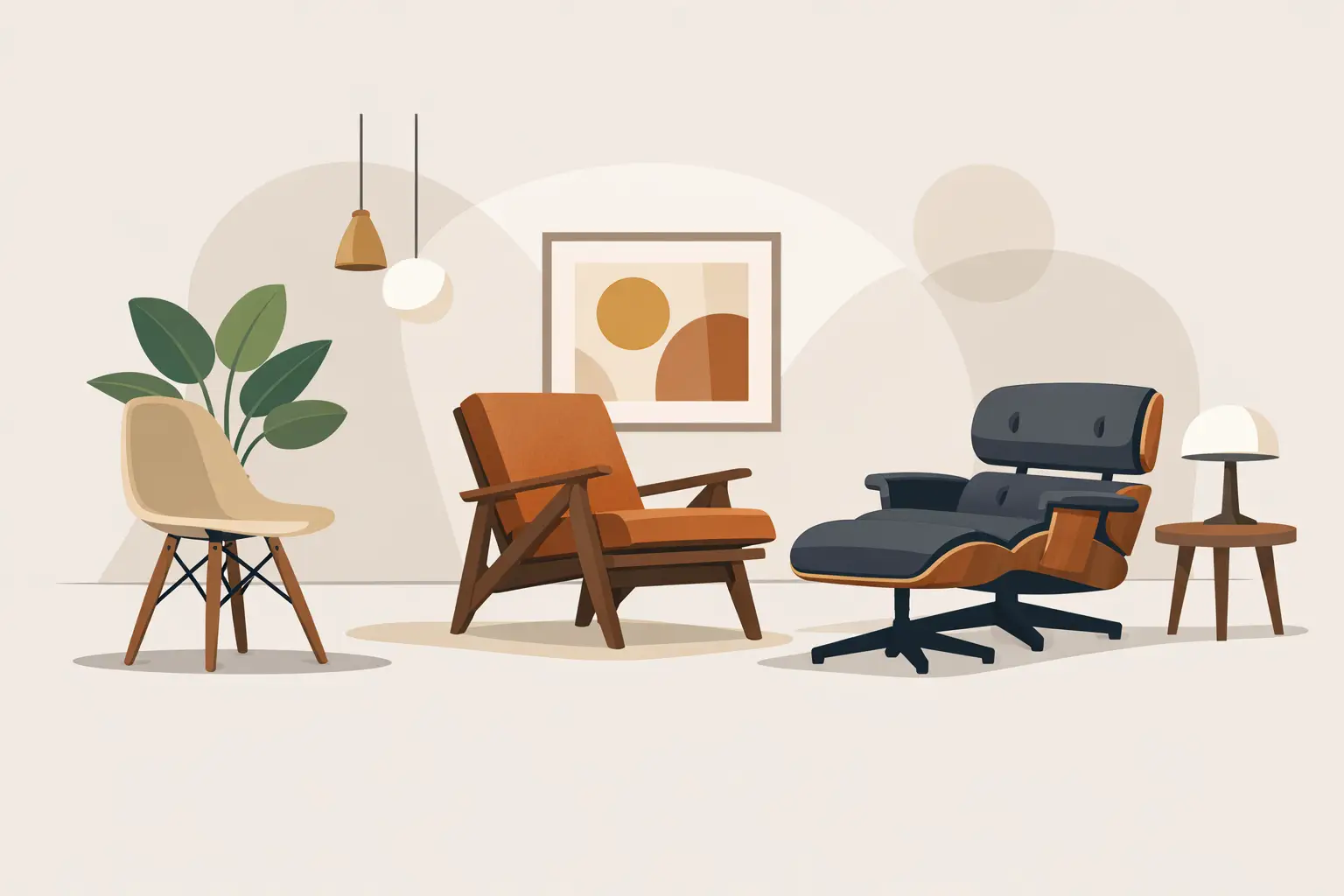
A chair can shift the entire mood of a room faster than a large cabinet or a dramatic light fixture. That is why choosing a design mid century modern chair is rarely a minor decision. The right piece brings structure, lightness, and visual intelligence to a space. The wrong one, even if expensive, can feel generic within a week.
Mid-century seating remains desirable for a simple reason: it solved everyday function with uncommon elegance. The lines are controlled, the profiles are often airy, and the materials were selected to age with character rather than disappear into anonymity. For collectors, decorators, and design-conscious homeowners, the appeal is not nostalgia alone. It is proportion, material honesty, and a kind of restraint that still reads as current.
What defines a design mid century modern chair
Not every vintage chair with tapered legs belongs in this category. A true design mid century modern chair usually reflects the design culture that emerged between the 1940s and the 1970s, when furniture moved toward cleaner silhouettes, engineered comfort, and a more open relationship with domestic space. Curves were studied, not decorative for their own sake. Wood frames were often slender but precise. Metal, leather, plywood, cane, velvet, and bouclé each appeared in forms that balanced utility with style.
What makes these chairs endure is their discipline. They rarely ask for attention through excess. Instead, they hold a room by the quality of their line. An Italian armchair from the period may have a sculptural walnut frame and generous upholstered seat, while a more architectural dining chair might rely on a delicate profile and perfect rhythm between backrest, legs, and seat depth. In both cases, the result feels intentional.
This is also where many contemporary reproductions fall short. They may imitate the outline but miss the tension between comfort and proportion. Originals often reveal better joinery, richer timber, more convincing upholstery scale, and a presence that comes from materials aging naturally over time.
Why this chair still matters in contemporary interiors
Mid-century design has been overexposed in trend cycles, yet the best examples remain untouched by fashion fatigue. That happens because these chairs work across different settings. They can sharpen a minimal interior, soften a more classical room, or add authority to an eclectic arrangement filled with art, glass, and decorative objects.
A strong piece of seating does not need a matching set to make sense. In fact, a single chair can be more compelling when treated as an accent with real identity. A lounge chair near a Murano floor lamp, a pair of Italian dining chairs at the ends of a table, or a refined desk chair in a study can create exactly the kind of tension that collected interiors need.
For buyers with a developed eye, this is the deeper value of the category. A design mid century modern chair is not just practical seating. It is often the element that introduces movement into a room defined by straight architecture, or the one that keeps a richly decorated interior from feeling heavy.
How to evaluate proportions before style
The first mistake many buyers make is choosing with the eyes alone. Photographs can exaggerate elegance while hiding scale problems. Before focusing on wood species, upholstery, or national origin, look at proportion.
Seat height matters more than expected. A low lounge chair may be visually beautiful but wrong for daily use in a formal living room. A dining chair with a dramatic back can look perfect in isolation and feel awkward once placed under a table. The angle of the backrest, the width between arms, and the visual weight of the legs all affect how the chair behaves in a room.
A good mid-century chair tends to resolve these issues with subtle confidence. It does not sprawl unless it was designed to lounge. It does not dominate the table unless intended as a host chair. It reads clearly from multiple viewpoints, which is essential in open-plan spaces where furniture is seen in the round.
This is where trained curation matters. Sophisticated interiors are rarely built from isolated attractions. They are built from pieces that speak to one another through scale and silhouette.
Materials, patina, and the difference between age and wear
A vintage chair should show life, but life is not the same as neglect. Patina can be one of the most seductive qualities in mid-century furniture, especially on walnut, teak, rosewood, or lacquered metal. The surface may soften, the grain may deepen, and small signs of use can add credibility. Yet there is a line between attractive maturity and structural compromise.
Check the frame first. Tight joints, stable legs, and balanced stance matter more than a fresh fabric replacement. Reupholstery is often possible and sometimes desirable, especially when the original textile has deteriorated. A weak structure is another matter.
Wood should retain clarity and consistency, even when marked by time. Metal should not show corrosion that threatens integrity. Cane should not sag beyond recovery. Foam, webbing, and internal support may need updating, but these interventions are acceptable when handled with respect for the original form.
For premium buyers, there is also a practical question: do you want untouched originality or a carefully restored piece ready for immediate placement? There is no universal answer. A collector may prefer original upholstery, even with visible aging, while a designer furnishing a residential project may favor restored comfort and cleaner presentation. It depends on whether the chair is being acquired as a document, a decorative statement, or a daily object.
Italian character within mid-century seating
Italian mid-century chairs occupy a distinct position in the market because they often combine formal refinement with material warmth. There is usually a stronger sculptural instinct than in purely utilitarian production. Even compact forms tend to have gesture.
This can appear in carved arm details, elegantly flared legs, brass accents, curved backs, or upholstery with a softness that offsets the rigor of the frame. The result is less industrial than some Northern European examples and less corporate than many office-oriented pieces from the same period. For interiors that value atmosphere as much as function, this balance is especially attractive.
That is one reason curated sources such as Sound Of Vintage Italy resonate with collectors and designers looking for pieces that feel selected rather than merely stocked. The distinction is visible. A chair with true Italian character brings not just era recognition, but a more layered decorative presence.
Where a design mid century modern chair works best
Placement changes perception. In a dining room, these chairs establish rhythm and define the architecture of the table. In a living room, a single statement chair can become the hinge between sofa, rug, and lighting. In a bedroom, a compact upholstered piece can add a note of cultivated ease that feels far more personal than standard occasional seating.
Home offices are another compelling setting. A mid-century chair at a desk introduces visual lightness and often makes the room feel more residential, which is particularly valuable when workspaces are integrated into the home. Hospitality settings use them for similar reasons. They are refined without being cold.
That said, not every iconic shape belongs everywhere. A delicate dining chair may struggle in a family kitchen with heavy daily use. A deep lounge chair may disappear in a narrow apartment. The best interiors respect the intended use of the object rather than forcing it into a purely stylistic role.
Original vintage or reproduction
This question is less ideological than people pretend. Reproductions can serve a purpose, especially when budget, quantity, or project timelines are strict. But they rarely deliver the same tactile depth. The timber often looks flatter, the upholstery less nuanced, and the dimensions occasionally feel slightly off, which is enough to weaken the entire silhouette.
Original vintage pieces ask for more discernment. Condition varies, restorations differ in quality, and scarcity affects pricing. Yet when the piece is right, the difference is immediate. The chair feels authored. It has gravity without bulk and detail without noise.
For a buyer building a home slowly, one authentic chair can do more than four approximate ones. It sets a standard for everything that follows.
Buying with a collector’s eye
If the goal is long-term value, buy beyond trend. Look for a chair with clarity of line, quality materials, and a profile that remains convincing even when separated from its period styling. Pieces that rely too heavily on novelty can date quickly, even when old. Pieces with real design intelligence keep adapting to new interiors.
Provenance, maker attribution, and documented restoration can all matter, but they are not the only indicators of worth. Some chairs deserve attention because they are simply excellent examples of anonymous or workshop production from the era. A disciplined eye will recognize when craftsmanship and proportion speak louder than a famous name.
The most satisfying purchases usually happen when emotional response and formal quality meet. You notice the chair across the room, then respect it more as you get closer. That is usually a very good sign.
A well-chosen mid-century chair does not just fill a corner or complete a set. It gives a room posture, memory, and a point of view you can feel every time you enter.