
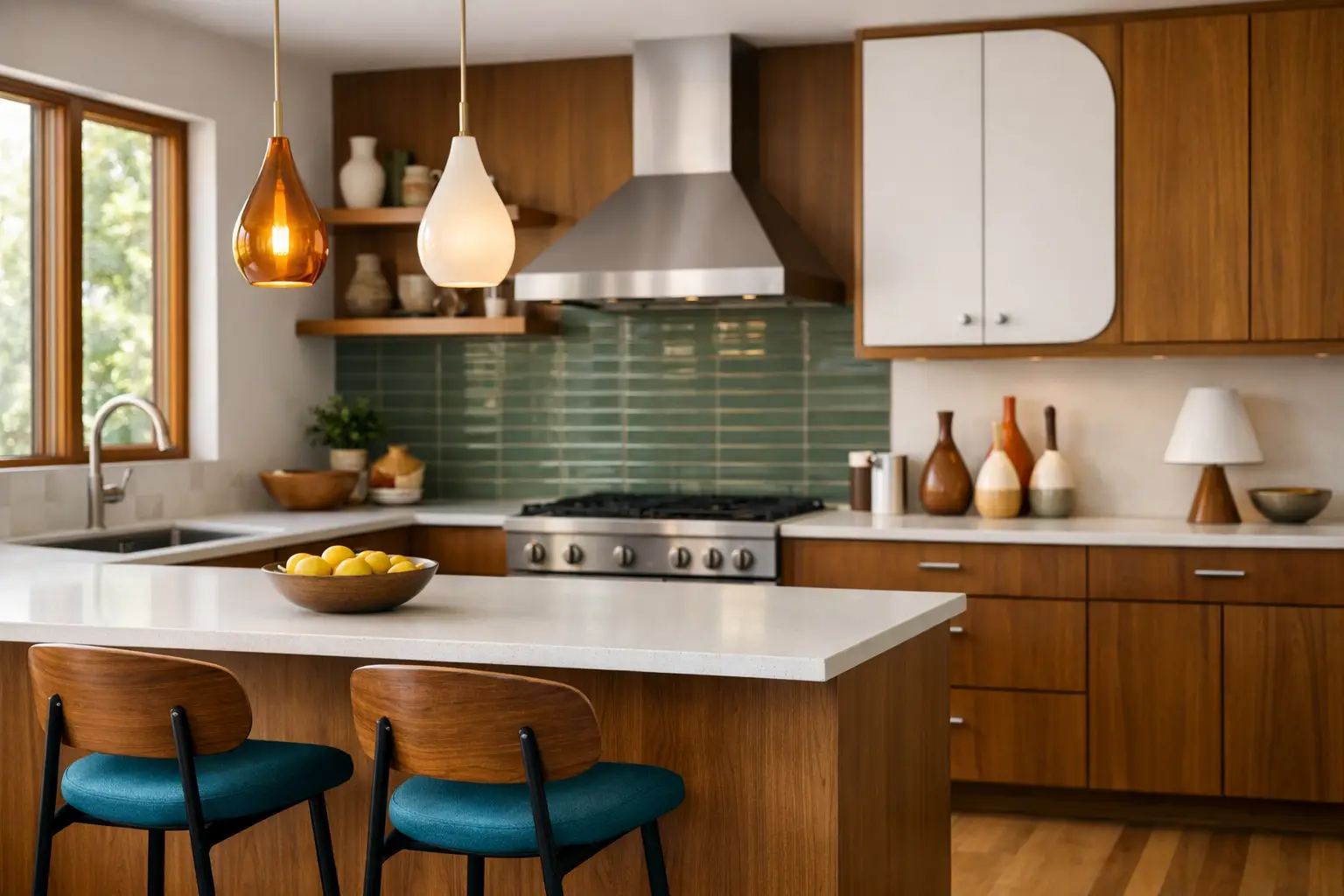
A convincing mid-century modern kitchen is rarely built from one dramatic gesture. More often, it comes together through restraint – the right cabinet line, the right wood tone, a light fixture with presence, and surfaces that feel edited rather than overdesigned. If you are wondering how to create a mid century modern kitchen, the answer begins with proportion and material honesty, not nostalgia for nostalgia’s sake.
The best examples do not look staged for a photo set. They feel architectural, functional, and calm. There is warmth in the wood, clarity in the layout, and just enough character in the lighting and decorative accents to suggest a cultivated eye.
How to create a mid century modern kitchen without making it look themed
The first distinction to make is between a kitchen inspired by mid-century modern design and a kitchen dressed up in retro references. These are not the same thing. A true mid-century approach favors clean horizontal lines, practical storage, organic materials, and a controlled palette. It does not depend on diner stools, checkerboard overload, or novelty signs.
That difference matters because the style was born from design discipline. Cabinets were integrated into architecture. Hardware was minimal. Ornament existed, but in measured form. The room was meant to work beautifully first, and impress second.
So before selecting finishes, look at the room as a composition. Are the sightlines clean? Do upper cabinets feel heavy? Is the island oversized for the space? Mid-century modern kitchens tend to breathe. Even in compact footprints, they avoid visual congestion.
Start with the layout and silhouette
In this style, shape is as important as finish. Flat-panel cabinetry is the natural starting point because it establishes the crisp, uninterrupted lines associated with mid-century interiors. If shaker doors dominate the room, the effect shifts immediately toward farmhouse or transitional.
Low, horizontal emphasis is especially helpful. Long cabinet runs, open visual flow, and shelving used sparingly create the sense of order the style needs. If you are renovating from scratch, this is the moment to reduce unnecessary trim, fussy crown molding, and decorative millwork that interrupts the architectural simplicity.
An island can work beautifully, but only if it feels integrated. A blocky, oversized island with exaggerated detailing tends to fight the period language. A simpler form, perhaps with wood cladding or a waterfall edge used discreetly, usually feels more resolved.
Choose wood with presence, not heaviness
Wood is one of the defining materials of a mid-century modern kitchen, but species and finish make all the difference. Walnut is the classic reference because of its depth and elegant grain, though teak-inspired tones and warm oak can also work. The goal is richness without rusticity.
Avoid overly distressed finishes, prominent gray washes, or thick glossy stains. Mid-century wood should feel smooth, tailored, and intentional. Satin and matte finishes tend to support that effect better than anything too reflective.
If full wood cabinetry feels too dark for your space, mix wood lowers with painted uppers, or use wood on a central island and keep perimeter cabinetry more restrained. This is one of those decisions that depends on ceiling height, natural light, and room size. Mid-century interiors are warm, but they are also balanced.
Let the color palette stay disciplined
One reason the style endures is that it understands editing. A mid-century modern kitchen does not need ten colors to feel alive. It usually performs better with a base palette of warm wood, white or cream, black accents, and one or two controlled color notes.
Olive, ochre, burnt orange, deep teal, muted blue, and mossy green all sit comfortably within the vocabulary, especially when used in tile, upholstery, art, or small appliances rather than across every surface. The palette should support the architecture, not compete with it.
If you prefer a quieter interpretation, lean into neutrals with contrast. Off-white counters, walnut cabinetry, black hardware, and sculptural lighting can express the period beautifully without reading as overtly retro.
Select countertops and backsplashes with restraint
This is often where a promising kitchen goes off course. Highly patterned stone with dramatic veining can overpower the clean lines that mid-century design depends on. In many cases, a more restrained countertop works better – think subtle quartz, solid surface looks, terrazzo, or stone with a quieter pattern.
Backsplashes should also be considered carefully. Simple stacked tile, square tile, or a slab backsplash can all work. What matters is scale and visual rhythm. Tiny mosaic patterns, ornate shapes, or overly glossy finishes tend to push the room in another direction.
There is room for personality, of course. A deep green tile or earthy ceramic surface can be beautiful if the rest of the room remains composed. The trade-off is that a more expressive backsplash asks for greater discipline everywhere else.
Lighting is where the room gains character
If cabinetry establishes the structure, lighting introduces identity. A mid-century modern kitchen benefits from fixtures that feel sculptural, graphic, and historically aware. Globe pendants, cone shades, brass details, opaline glass, and well-proportioned wall sconces all belong naturally here.
This is also where authenticity becomes visible. A thoughtfully chosen vintage or vintage-inspired fixture can do more for the room than another expensive finish upgrade. It creates a focal point, but more importantly, it introduces the period language in a way that feels collected instead of manufactured.
Murano glass, when selected with discipline, can be especially compelling in a mid-century space. The key is proportion. One elegant pendant or a pair of refined sconces can add softness and depth. Too many statement pieces, however, can tip the kitchen from curated to theatrical.
Use hardware and metals with a light hand
Hardware in a mid-century modern kitchen should support the cabinetry rather than dominate it. Slim pulls, integrated channels, small knobs, or even hardware-free fronts can all work, depending on the cabinetry style. What you want to avoid is anything overly ornate, industrial, or aggressively rustic.
Brass, aged bronze, blackened metal, and stainless steel are all viable choices. The better question is which finish best suits the rest of the room. Warm woods often pair beautifully with brass or bronze. Cooler, more minimal kitchens can hold black or stainless more comfortably.
Consistency matters. Too many competing metal finishes can fragment the look. A kitchen with mixed metals can be successful, but it needs a clear hierarchy rather than a collection of unrelated decisions.
Bring in vintage pieces where they count
A room inspired by mid-century modern design becomes more persuasive when at least a few elements carry actual age, patina, or historical reference. This does not mean turning the kitchen into an antique display. It means introducing selective pieces with decorative and visual weight.
A vintage chandelier over a breakfast table, a pair of Italian wall lights, a sculptural mirror nearby, or a small bar cabinet in warm wood can shift the atmosphere immediately. These additions give the kitchen context. They suggest that the room belongs to someone who collects with intention.
This is where a curated source matters. A specialist selection, such as the kind associated with Sound Of Vintage Italy, helps avoid the common problem of mixing mid-century forms with generic reproductions that flatten the room’s character.
Keep styling architectural, not busy
Countertops should not become storage displays. Mid-century modern kitchens look best when styled with breathing room. A ceramic bowl, a timber tray, a vintage coffee set, or a single lamp on a sideboard often says more than a crowded arrangement of objects.
Artwork can work exceptionally well, especially abstract prints, graphic black-and-white photography, or pieces with strong color blocking. But placement matters. Let objects reinforce line, form, and negative space.
Plants are also part of the language, particularly those with sculptural leaves. Even here, restraint is useful. One well-placed plant has more authority than five scattered around the room.
How to create a mid century modern kitchen in a newer home
A common concern is whether the style can feel authentic in a new-build or recently remodeled property. It can, but the approach should be slightly different. In a period home, architecture does some of the work for you. In a newer space, materials and proportions must carry more of the story.
Focus on cabinetry profile, lighting, and furniture-like elements first. Then introduce texture through wood, ceramics, and selected vintage accents. If the room already has contemporary windows and open-plan architecture, that can actually support a mid-century mood quite naturally.
The mistake is trying to force age where there is none. Instead of imitation distressing or overtly retro references, aim for timeless forms and a few pieces with real presence. Authenticity comes from coherence, not from pretending the room is older than it is.
A mid-century modern kitchen is ultimately an exercise in selection. Not more cabinetry, but better lines. Not more decoration, but stronger objects. When the room feels composed, warm, and quietly distinctive, you are very close to getting it right.