

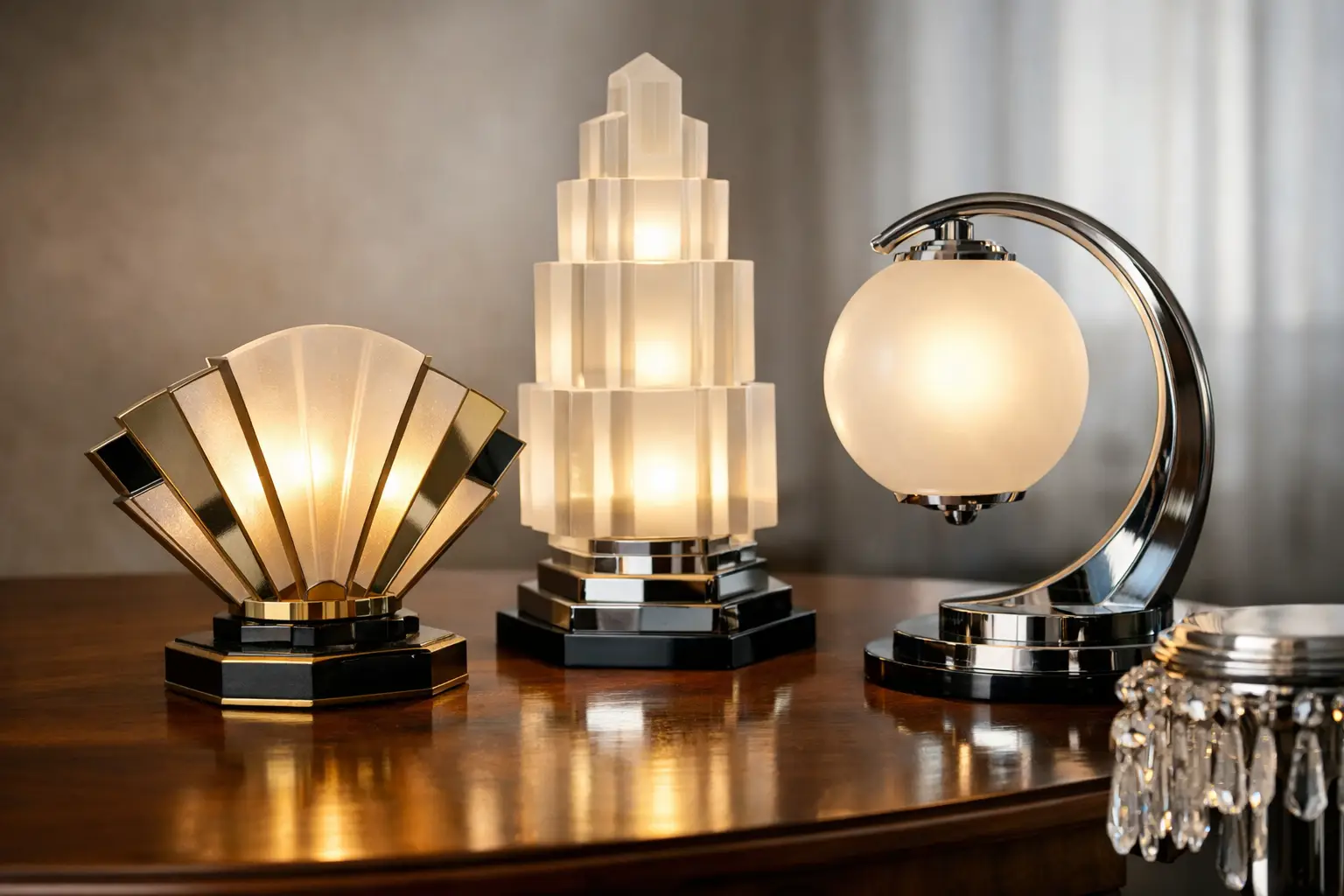
A stepped glass shade catches the light differently at dusk than it does at noon. That is part of the enduring appeal of collectible Art Deco lighting – these pieces do not simply illuminate a room, they shape its atmosphere with precision, glamour, and architectural clarity. For collectors and design-led buyers, the category remains one of the most compelling intersections of decorative art and functional design.
Art Deco lighting sits in a particularly desirable space because it balances visual presence with usability. A chandelier, table lamp, wall sconce, or floor lamp from the period can anchor a room while still serving an everyday purpose. Unlike certain categories of decorative antiques that ask to be admired at a distance, lighting enters daily life. It switches on, reflects, softens, and dramatizes. That ongoing interaction is one reason truly strong examples remain so sought after.
What makes collectible Art Deco lighting collectible
Not every old lamp from the 1920s or 1930s belongs in the same conversation. Collectibility tends to rest on a combination of form, material quality, condition, rarity, and visual authority. The strongest pieces show a disciplined geometry – stepped profiles, symmetrical silhouettes, streamlined contours, and a clear relationship between ornament and structure.
Materials matter just as much. Frosted glass, chromed metal, patinated bronze, brass, alabaster, marble, and finely worked wood all appear within the period, but quality is evident in the handling. Good Art Deco lighting feels intentional. The proportions are controlled, the transitions between materials are resolved, and decorative details support the silhouette rather than distract from it.
There is also an important distinction between period Art Deco and later Deco-inspired production. Mid-century and contemporary revivals may borrow the look, but collectors generally place higher value on original pieces from the interwar years or on later works by notable makers that interpret the language with unusual conviction. Provenance, maker attribution, and documented origin can all elevate a piece, although an anonymous object with exceptional design can still be highly desirable.
The forms that define collectible Art Deco lighting
The category is broad, which is part of its appeal. Chandeliers often represent the most theatrical end of the spectrum. Multi-arm examples in bronze or nickel, geometric fixtures with molded glass panels, and cascade compositions with etched or frosted elements all bring a strong period identity. These pieces can read as luxurious without becoming ornate in the older, more decorative sense.
Table lamps are often where collectors begin. They are easier to place, easier to live with, and easier to compare across makers and regions. A successful Art Deco table lamp may pair a sculptural base with a shade in molded, etched, or opaline glass. Some examples lean toward machine-age restraint, while others introduce stylized female figures, animal forms, or dramatic stone plinths. The trade-off is simple: the more figurative the lamp, the more specific its interior context may need to be.
Wall sconces and flush mounts deserve closer attention than they often receive. In interiors that favor atmosphere over statement, they can be the most sophisticated route into the category. They tend to integrate beautifully into hallways, powder rooms, dining rooms, and hospitality-style spaces. A pair of strong sconces can transform a plain wall with far less visual weight than a large chandelier.
Floor lamps occupy a special niche because they combine scale with sculptural presence. The best examples feel architectural, almost like vertical monuments. They can be dramatic, but they require room to breathe. In compact interiors, a floor lamp with a heavy marble base or broad shade may overwhelm the arrangement.
How to judge quality beyond first impressions
Art Deco is a style that photographs well, which is both its advantage and its trap. Sharp lines and glamorous materials can make mediocre examples look better online than they do in person. Collectors should pay close attention to construction, finish, and balance.
Start with the materials. Glass should have depth, not a flat or overly recent look. Metal surfaces may show age, but aging should feel coherent with the object rather than artificially distressed. Stone elements should be checked for cracks, repairs, or chips around stress points. With alabaster in particular, subtle wear is common, but structural weakness is another matter.
Then consider the composition. Does the lamp feel resolved from every angle, or only from the front? Is the scale of the shade appropriate to the base? Have decorative motifs been applied with restraint? Good collectible Art Deco lighting tends to feel edited. Even when it is glamorous, it rarely feels chaotic.
Rewiring is another practical point. Many period fixtures require updated electrical work for safe use. Professional rewiring does not usually diminish value if it is carried out correctly and sensitively. In fact, for buyers who intend to use the piece regularly, it is often essential. What matters is whether original components of aesthetic significance have been preserved where possible.
Collectible Art Deco lighting in Italian and European interiors
For buyers with an eye for European decorative history, Art Deco lighting offers unusual range. French examples often emphasize luxurious materials and refined silhouettes. Austrian and Central European pieces can introduce a more restrained geometry. Italian interpretations may carry a particular elegance in the relationship between metal, glass, and sculptural line.
This is where a curated approach becomes especially valuable. The market includes everything from formal Parisian chandeliers to compact sconces with a cleaner, almost rationalist profile. For a collector furnishing a Milan apartment, a London townhouse, or a New York pied-a-terre, the right piece is rarely just about period accuracy. It is about visual compatibility with the architecture and with the broader decorative language of the space.
A mirrored console, a velvet seating group, or a polished wood sideboard can all support an Art Deco fixture beautifully, but contrast often works just as well. One of the most interesting uses of collectible Art Deco lighting appears in interiors that are otherwise contemporary. Against clean plaster walls, quiet stone, and minimal furnishings, a period lamp gains sharper definition and reads almost as sculpture.
Where value really comes from
Value in this category is not dictated by age alone. Rarity matters, but so does presence. A common form in exceptional condition may be a stronger acquisition than a rarer object with compromised materials or weak proportions.
Maker names can significantly influence price, especially in the upper end of the market, but attribution is only one layer. Collectors also respond to originality of design, completeness, and decorative versatility. A pair of sconces is often more valuable than a single one because it offers immediate placement potential. A chandelier with original glass elements intact will generally command more interest than one with replacements, even if the replacements are sympathetic.
There is also the question of scale. Monumental fixtures can be rare and impressive, but they are not always the wisest purchase unless the setting justifies them. More modestly scaled lamps often enjoy broader demand because they fit more interiors. Collectibility, in that sense, is partly about the future life of the object.
At Sound Of Vintage Italy, this is exactly where curation matters most: separating pieces that merely reference a desirable style from those that hold their own as enduring decorative objects.
How collectible Art Deco lighting fits into a room now
The old assumption that Art Deco belongs only in period interiors no longer holds. Today, the most persuasive rooms use it selectively. A single geometric pendant above a dining table can provide enough character to define the entire space. A pair of wall lights can add rhythm to a corridor. A sculptural table lamp can sharpen the profile of a bedroom or study.
The key is restraint. Because Art Deco lighting often has strong line and surface presence, it does not need visual competition from too many equally assertive objects nearby. Let polished metal speak to matte walls. Let frosted glass sit against darker wood. Let one dramatic silhouette control the mood rather than repeating the motif too aggressively.
Collectors also benefit from thinking beyond decoration. Light quality matters. Some period fixtures cast a softer, more diffused glow, while others produce directional light better suited to accent use than general illumination. A beautiful lamp that leaves a room functionally dim may still be worth owning, but it should be chosen with that trade-off in mind.
Choosing with a collector’s eye
A good purchase in this category usually begins with a simple question: would this piece still command attention if it were unlit? If the answer is yes, there is a strong chance the design has real merit. If the object relies entirely on sparkle, novelty, or styling context, it may not have the same staying power.
Look for pieces that feel composed, material-rich, and emotionally clear. The best collectible Art Deco lighting does not need explanation. It carries its era confidently, but it also feels current enough to live with now. That balance is rare, and it is exactly what makes the category so compelling for serious interiors.
A well-chosen Deco fixture does more than complete a room. It gives the space memory, structure, and a point of view that remains visible long after the light is switched off.
[…] many interiors, lighting is the fastest way to make the style visible. That is particularly true in Art Deco spaces, where […]