
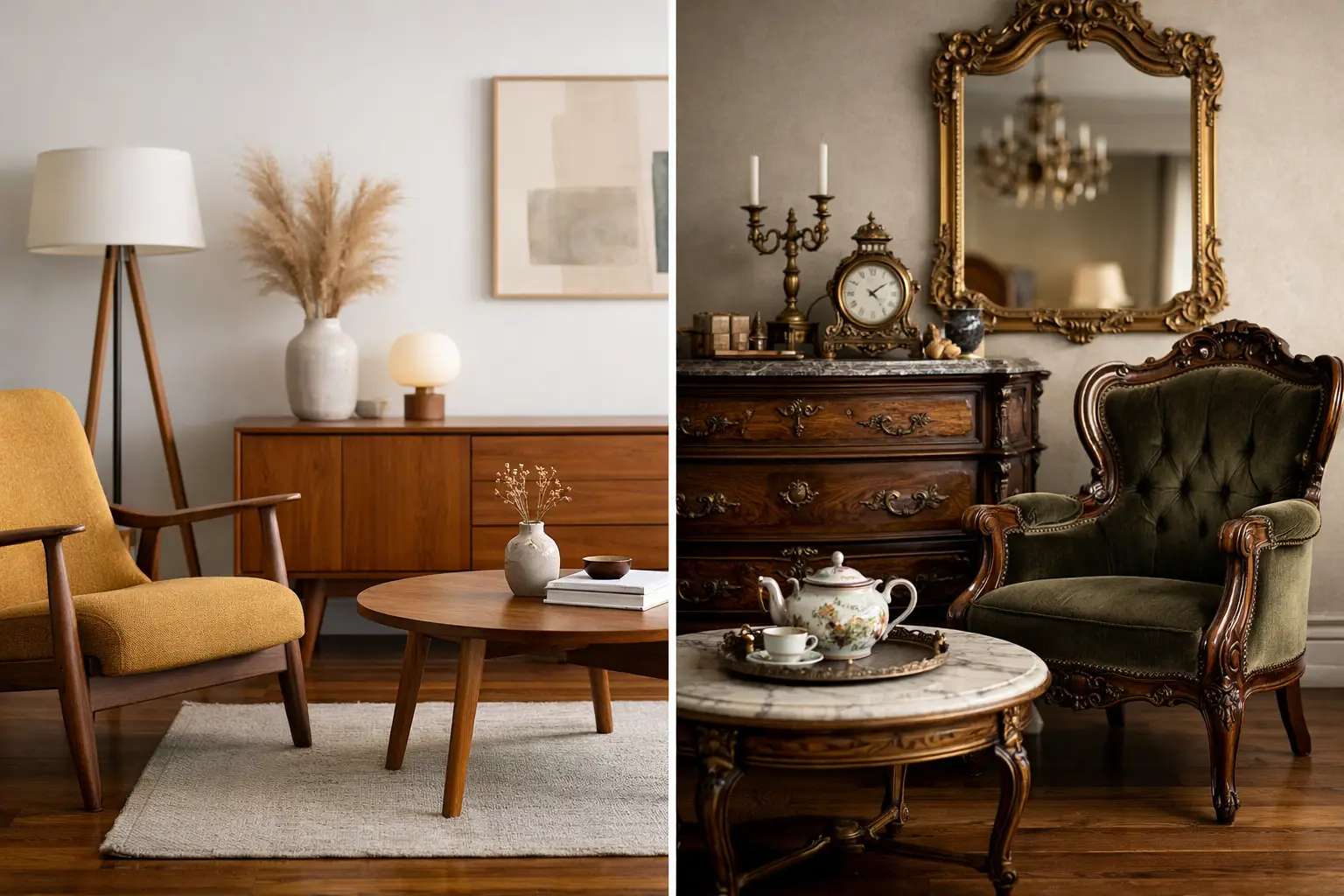
A walnut sideboard from the 1950s and a carved chest from the 1890s can both bring depth to a room, but they do not belong to the same category. The distinction between vintage furniture vs antique furniture matters because it shapes value, sourcing, restoration choices, and the visual language of an interior.
For collectors, designers, and private buyers, the difference is not just technical. It affects how a piece is read in a space. An antique often carries the weight of period craftsmanship and historical context. A vintage piece, especially in the world of Italian and European design, often speaks more directly to silhouette, material innovation, and the cultural mood of the 20th century.
Vintage furniture vs antique furniture: the actual difference
The simplest dividing line is age. Antique furniture is generally understood to be at least 100 years old. Vintage furniture is newer than that, but still old enough to belong to a recognizable past era. In most cases, vintage furniture refers to pieces from the 1920s through the 1980s, though the strongest demand tends to cluster around Art Deco, Mid-Century Modern, and postwar design.
That sounds clear enough, yet the market is more nuanced than the rule. A chair from 1970 is vintage, not antique, even if it is rare, highly collectible, and expensive. A cabinet from 1880 is antique even if its market value is modest. Age defines the category first. Quality, rarity, and desirability come after.
This is why the two terms should not be used interchangeably. They can overlap in prestige, but not in chronology.
Why the distinction matters when you buy
If you are furnishing a home, a hospitality space, or a design project, the label attached to a piece changes what you should expect from it. Antique furniture usually asks for a certain respect for proportion, patina, and historical integrity. Vintage furniture often offers greater flexibility. It can sit comfortably in contemporary interiors without feeling formal or museum-like.
There is also a practical difference in construction. Antiques are frequently made with traditional joinery, solid woods, hand-carved details, and finishes that show long-term aging. Vintage furniture may feature teak, rosewood, brass, chrome, lacquer, fiberglass, tubular steel, or molded forms that belong to industrial and modernist production. That difference affects maintenance, repair, and daily use.
For many buyers, the real question is not which category is better. It is which one aligns with the atmosphere they want to create. Antique furniture tends to introduce gravity and inherited character. Vintage furniture tends to bring rhythm, line, and visual clarity.
What defines antique furniture
Antique furniture is tied to a period before modern mass production became dominant. That does not mean every antique is ornate, but many pieces reflect a slower approach to making: cabinetmaking traditions, regional techniques, hand-applied veneers, marquetry, inlay, carved ornament, and a visible relationship between maker and material.
A late 19th-century writing desk, for example, may carry small irregularities that are not flaws at all. They are signs of age and workmanship. The wood may have darkened over time. Hardware may have been replaced once or twice. The finish may show wear where hands touched it most. These details often contribute to the object’s appeal rather than diminish it.
Antiques also tend to be more sensitive to restoration. Refinished surfaces, altered proportions, or replaced decorative elements can affect value significantly. Buyers who collect antiques usually care about originality, provenance, and historical coherence as much as visual impact.
What defines vintage furniture
Vintage furniture belongs to a different cultural rhythm. It often reflects modern design movements, changing domestic habits, and the rise of designers whose names still define taste today. Here, the focus may shift from handcraft alone to form, authorship, material experimentation, and production history.
A vintage credenza from the 1960s, a pair of Italian armchairs from the 1970s, or a sculptural floor lamp from the postwar era can all be highly sought after without being antique. Their value often comes from design language, maker attribution, rarity within a production run, and how well they capture the spirit of their time.
Vintage furniture also tends to work exceptionally well in layered interiors. It can sharpen a minimalist room, soften a new-build apartment, or create tension against architectural classicism. In a well-edited space, a vintage piece is rarely just functional. It acts as a visual signature.
Vintage furniture vs antique furniture in style terms
The stylistic gap between the two categories is often what buyers notice first. Antique furniture commonly brings depth through ornament, aging, and historical reference. Vintage furniture often brings presence through line, proportion, and material contrast.
An antique dining table may anchor a room with density and permanence. A vintage dining table may create the same focal point through elegance and restraint. An antique mirror can add decorative richness. A vintage mirror can feel architectural, almost graphic.
Neither approach is inherently superior. It depends on the setting. If a room needs softness, memory, and tactile complexity, antiques can be transformative. If it needs shape, lightness, and a more defined design statement, vintage furniture may be the sharper choice.
Many of the most compelling interiors use both. A mid-century console beneath a 19th-century mirror. An antique chest beside a modernist lamp. A Murano chandelier floating above a farmhouse table. The conversation between periods is often where a room becomes memorable.
How value is judged in each category
One of the most common misconceptions is that antique means more valuable and vintage means less valuable. In practice, the market does not work so neatly.
With antiques, value often depends on age, condition, rarity, craftsmanship, provenance, and the strength of demand for a particular style or region. Some antique categories remain highly collectible. Others are less fashionable than they once were, even when the workmanship is excellent.
With vintage furniture, value is often driven by design relevance. A relatively young piece can command a serious price if it comes from a desirable maker, belongs to an iconic period, or survives in exceptional condition. Certain Italian, Scandinavian, and French modernist pieces have long moved beyond decorative status into the realm of collectible design.
So when comparing vintage furniture vs antique furniture, value should be read through category-specific criteria, not assumptions. A 1960s sideboard by a known designer may outperform a 19th-century cabinet in the current market. The opposite can also be true.
Condition, patina, and restoration
Condition is where many buyers hesitate, and understandably so. Age leaves marks. The question is whether those marks support the character of the piece or compromise its use.
With antique furniture, patina is often central to desirability. Surface wear, softened edges, and tonal variation can confirm authenticity and give the object visual depth. Over-restoration can flatten that character. A piece stripped too aggressively may lose part of what made it compelling in the first place.
With vintage furniture, the balance is slightly different. Buyers usually tolerate honest wear, but they also expect functionality and cleaner visual presentation, especially in pieces defined by sleek surfaces or strong geometry. A vintage chrome lamp with pitting, or a lacquered cabinet with deep damage, may require more careful evaluation because condition affects both appearance and usability.
Good restoration is rarely about making a piece look new. It is about stabilizing, respecting materials, and preserving identity.
Which one is right for your space?
If your interior leans contemporary, vintage furniture is often the easier entry point. It integrates naturally with modern architecture, open plans, and edited palettes. It can add sophistication without introducing too much visual weight.
If your home has historical bones, antique furniture may feel more native to the setting. It can echo original moldings, stone floors, older millwork, or traditional layouts in a way that feels grounded rather than staged.
Still, the strongest rooms are usually not rigidly period-correct. They are selective. A single antique piece can give a modern interior credibility. A single vintage piece can cut through a traditional room and make it feel current. This is where a curated approach matters. At Sound Of Vintage Italy, that perspective is less about categories in isolation and more about how objects with distinct identities live together.
A final way to tell them apart
When you stand in front of a piece and ask whether it is vintage or antique, start with the century mark. Then look at what kind of presence it carries. Antique furniture often asks you to notice time. Vintage furniture often asks you to notice design.
Both can be rare. Both can be beautiful. Both can transform a room. The best choice is usually the one that feels less like a trend and more like a permanent part of your visual world.