
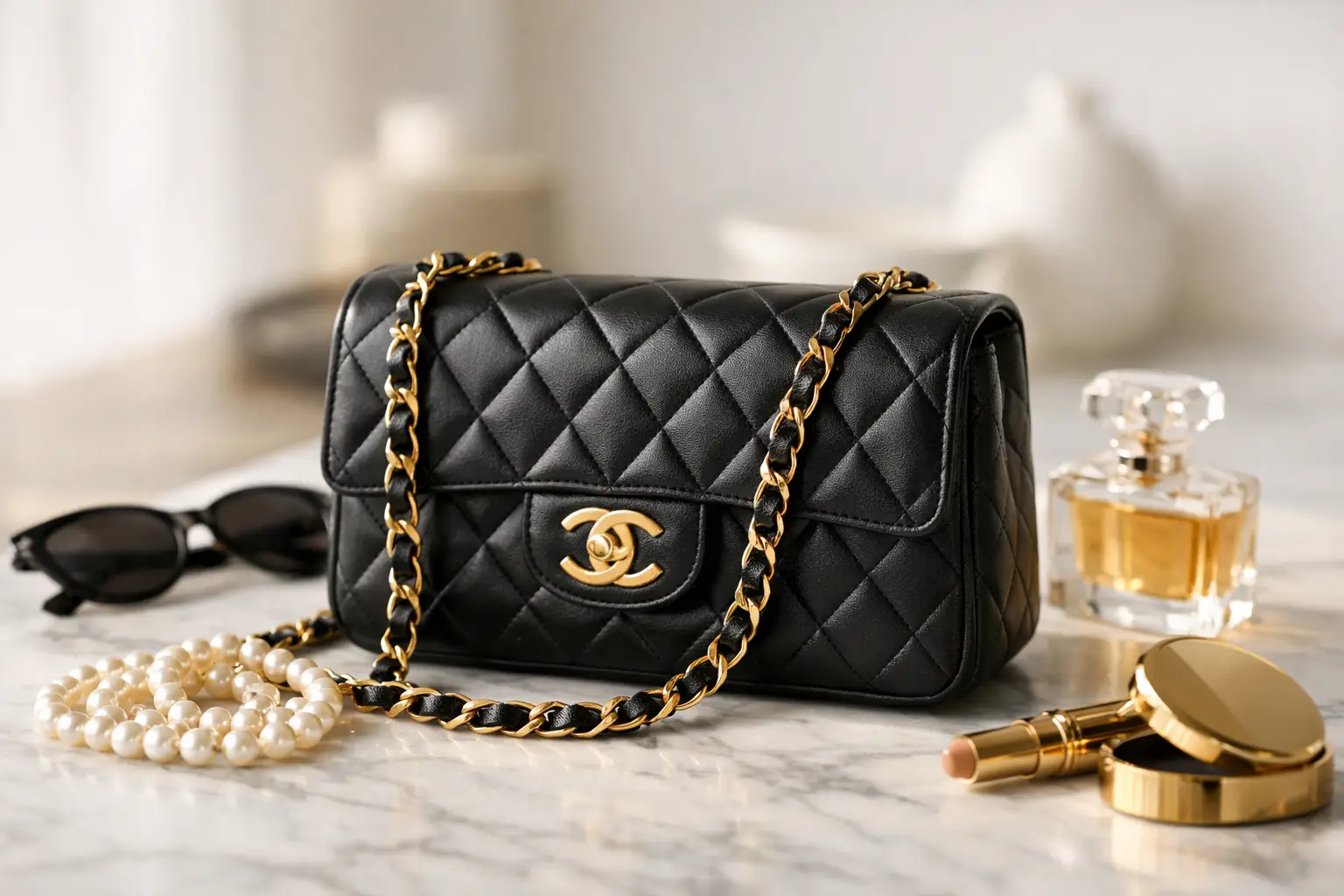
A Chanel vintage handbag rarely enters a wardrobe quietly. It arrives with presence – not only because of the logo, but because the best older Chanel bags carry proportion, restraint, and a kind of visual authority that many newer luxury pieces struggle to match. This Chanel vintage handbag review looks at what still makes these bags desirable, where the real differences lie, and when the romance of vintage is justified by quality.
For buyers who approach fashion the way they approach interiors, vintage Chanel has a very specific appeal. It is not only about status. It is about line, texture, hardware, patina, and the balance between decoration and discipline. Like a well-chosen Murano lamp or a sculptural mid-century chair, the right handbag does more than complete an outfit. It establishes taste.
Chanel vintage handbag review: what defines the appeal
The strongest reason to consider vintage Chanel is simple: many older pieces feel more substantial. This is especially true in bags from the 1980s through the early 2000s, where the leather often appears denser, the quilting more dimensional, and the hardware more convincing in hand. There is a tactile difference between a bag that has aged with dignity and one designed primarily for immediate retail impact.
The classic flap remains the reference point, and for good reason. Its chain strap, quilted body, and interlocking CC closure are among the most recognizable formulas in fashion history. Yet vintage Chanel is not only the classic flap. Camera bags, vanity cases, top-handle silhouettes, mini shoulder bags, and less obvious seasonal designs can be more compelling for collectors who prefer character over predictability.
Part of the charm is also tonal. A black lambskin flap with 24k gold-plated hardware has a different energy from a crisp contemporary boutique bag. It looks less manufactured and more lived in, in the best sense. That softness can read as elegance rather than wear, provided the bag has been well kept.
Materials, construction, and why vintage often feels richer
If there is one area where a Chanel vintage handbag review becomes genuinely useful, it is construction. Buyers are often drawn first by the silhouette, but value is usually found in material quality and how the bag has held its shape over time.
Lambskin is perhaps the most seductive Chanel leather. It has a smooth, buttery finish that gives the quilting a plush, luxurious depth. On vintage bags, lambskin often develops a beautiful softness, but it is also more vulnerable to scratches, corner wear, and pressure marks. It suits buyers who value refinement and are comfortable with a more delicate surface.
Caviar leather offers a different proposition. Its pebbled texture is more resistant and tends to wear more pragmatically. A vintage caviar Chanel can be an excellent choice for someone who wants the codes of the house with a bit less anxiety in everyday use. It may lack some of lambskin’s sensuality, but it often compensates with ease and longevity.
Then there is the hardware. Older Chanel bags are frequently praised for their weight and finish, and not without reason. Vintage gold-tone hardware often feels warmer and less flat than newer equivalents. On certain periods, especially bags produced before changes in plating standards, the metal details can be a decisive part of the bag’s appeal.
Stitching, edge finishing, chain movement, and interior lining also matter. A strong vintage Chanel bag should feel coherent. Nothing should appear flimsy, forced, or cosmetically corrected beyond recognition. Restoration can be acceptable, but heavy refurbishment sometimes removes the very qualities that made the bag desirable.
Which vintage Chanel bags are most worth buying?
The answer depends on what you value most: investment logic, daily usability, or aesthetic distinctiveness.
If you want the safest and most recognized option, the classic flap remains the benchmark. Medium sizes tend to have the widest appeal, and black with gold hardware is still the most versatile configuration. It moves easily between day and evening, and it sits naturally within both minimal and more decorative wardrobes.
If practicality matters more, the Chanel camera bag deserves attention. It is often lighter, easier to wear, and sometimes less inflated in price than the classic flap. The silhouette has a relaxed sophistication that works especially well with tailored coats, denim, or understated evening dressing.
For buyers with a more editorial eye, top-handle vanity cases and structured mini bags can be more interesting. These are not always the most rational purchases, but they can be the most memorable. In a curated wardrobe, that matters. A piece does not always need to be universal if it has presence.
Seasonal models are where caution and opportunity meet. Some are undervalued because they sit outside the standard collector canon. Others are expensive simply because they are rare, not because they are especially beautiful or useful. Rarity alone is never enough.
What to check before buying
Authenticity is the first concern, but condition is where many buyers make the more expensive mistake. A genuine Chanel bag with compromised structure, damaged corners, odor, sticky interior lining, or poor repainting can quickly lose its pleasure.
Start with shape. Vintage softening is one thing; collapse is another. A bag should still read as intentional in silhouette. Then examine the quilting. It should look aligned and evenly padded for its age, not deflated beyond character. Corners, flap edges, and strap attachment points deserve close inspection because these areas reveal actual use.
The interior matters as much as the exterior. Serial stickers, date-appropriate details, lining quality, stamping, and pocket construction should all make sense together. An authentic vintage bag can still have replaced parts or later repairs, and that does not automatically disqualify it. But the seller should be clear about what is original and what is not.
Smell is an underrated factor. Storage odor, mold, cigarette residue, or perfume saturation can be difficult to reverse. A visually beautiful bag that carries persistent odor is rarely a satisfying purchase.
This is one reason curated vintage platforms remain valuable. Selection is not only about access, but about filtration. For a buyer who values coherence, provenance, and visual quality, that editorial layer saves time and reduces avoidable compromise.
Price versus value in a Chanel vintage handbag review
Vintage Chanel is expensive, and in many cases more expensive than logic alone would suggest. Price is driven by brand prestige, collector demand, scarcity, condition, and a broader cultural shift toward archival luxury. But value is more nuanced.
A vintage Chanel bag is worth it when it delivers at least two of these three things: enduring beauty, functional wearability, and stable desirability. If a bag is beautiful but impossible to use, it becomes a display piece. If it is practical but visually ordinary, the premium may be harder to justify. If it is collectible but over-restored, future appeal may narrow.
The strongest purchases tend to be bags with clear Chanel identity, excellent material integrity, and a condition level that still permits use. Tiny signs of age are not a problem. In fact, they can be an asset. What matters is whether the aging feels graceful.
For some buyers, the better decision is not the most iconic Chanel, but the one that integrates naturally into their existing visual world. A person drawn to Art Deco geometry, lacquered surfaces, or refined 1980s tailoring may connect more strongly with a structured vintage shoulder bag than with the classic flap everyone expects.
Who should buy vintage Chanel – and who should not
Vintage Chanel suits buyers who appreciate nuance. If you expect perfection, complete uniformity, and the experience of a brand-new luxury purchase, vintage may frustrate you. These bags often come with softened leather, light surface marks, slight interior wear, or subtle irregularities that are part of their timeline.
If, however, you respond to objects with memory, texture, and design authority, vintage Chanel can be deeply satisfying. It belongs particularly well in wardrobes built with intention rather than trend rotation. The same buyer who chooses a 1970s brass mirror over a newly made replica will likely understand the appeal immediately.
There is also a practical point. If you plan to use the bag often and without ceremony, caviar leather or a more relaxed model may serve you better than a fragile lambskin classic flap. If your interest is more collectible than everyday, then rarity, hardware period, and archival character may matter more than convenience.
A thoughtful Chanel vintage handbag review does not end with a universal yes or no, because the category is too broad for that. The right piece can be exceptional – visually disciplined, materially rich, and far more distinctive than many current luxury bags. The wrong one can be overpriced nostalgia. The difference is rarely in the name alone. It is in condition, proportion, and whether the bag still has enough presence to justify its history.